
Blog
Sleep Lighter: How PSCL Beds Is Using Technology to Build a Lower-Carbon Bed Industry

A bed is one of the biggest and heaviest things most people will ever have delivered to their home. Behind every bed sold in the UK sits a long chain of timber, foam, fabric, steel, cardboard, factory floors, container ships and delivery vans. Most of that chain is invisible to the customer, and for a long time the industry has been happy to keep it that way. We think that has to change.
We are not changing it with a slogan or a single “eco” range. We are changing it with a different way of running the business from end to end. We call it Sleep Lighter, and it rests on one idea: the lowest-carbon bed is the one made in the right quantity, made nearby, made to last, and delivered on a route that does not waste a mile.
Technology is what makes that possible at scale. PSCL Beds has always been an online-first business, so we hold data on every order, every component and every delivery. Over the past 24 months we have put that data, and prediction software built around it, to work on the parts of the industry customers never see. We do not build the beds and we do not drive the vans. What we do is plan, so that the people who do can do it with less waste. This is what we have done so far, and what it means for the bed that arrives at your door.
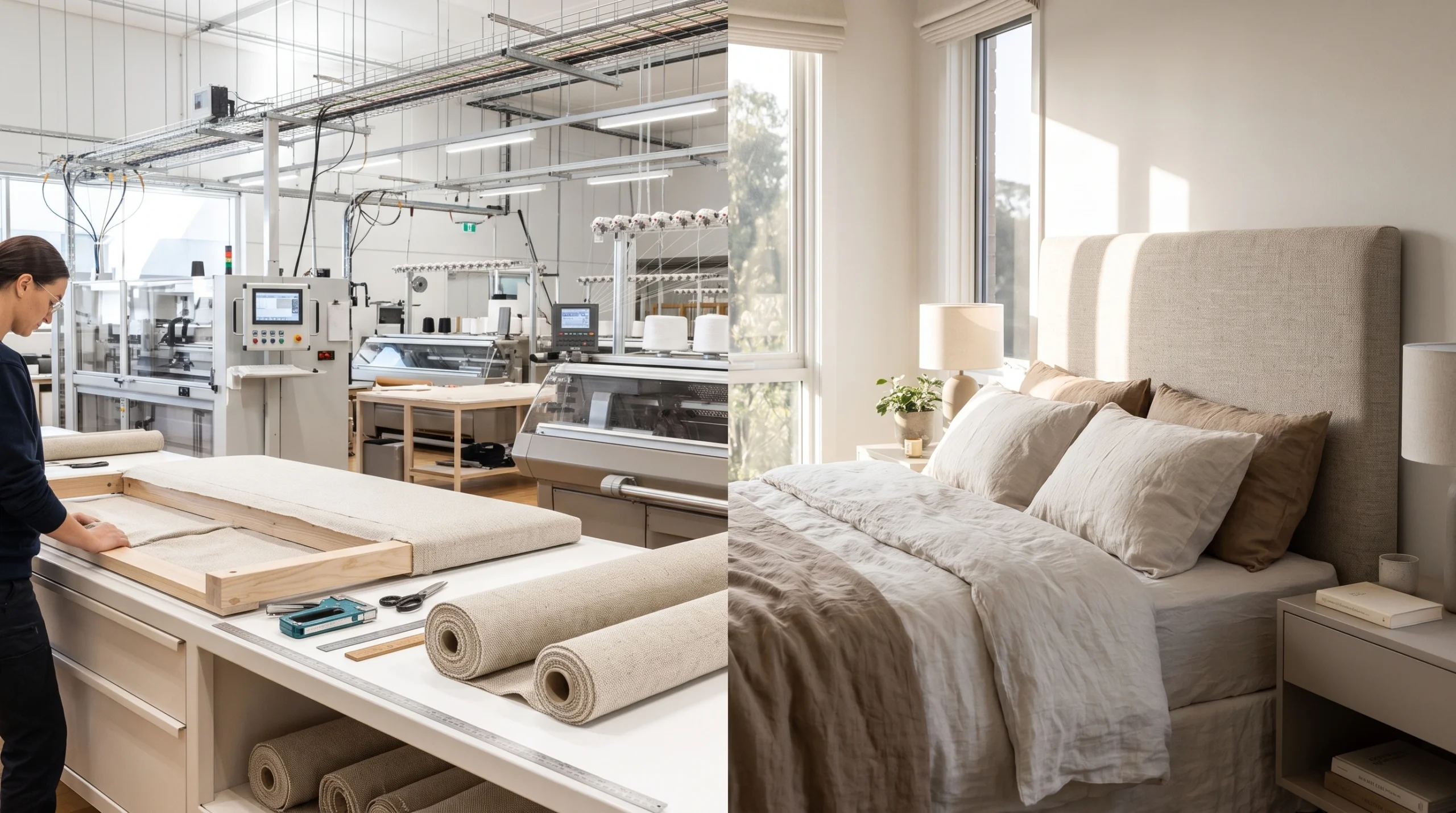
From workshop bench to bedroom window. The whole journey of a PSCL bed happens within one county.
Predicting what to make, not guessing
The biggest source of waste in furniture manufacturing is not the offcut on the workshop floor. It is the material ordered, cut or built for demand that never arrived, and the rushed re-order when demand turned up that nobody had planned for. Both cost money. Both cost carbon.
We now run forecasting software across our order data to predict, product by product and fabric by fabric, what will need to be built in the weeks ahead. It reads live sales, seasonality, advertising activity and the way customers actually configure their beds, right down to headboard height, base type and storage option. The output is a quantities plan for each of the Yorkshire workshops that make our beds: how much timber, foam, fabric and fixings they are likely to need, and when.
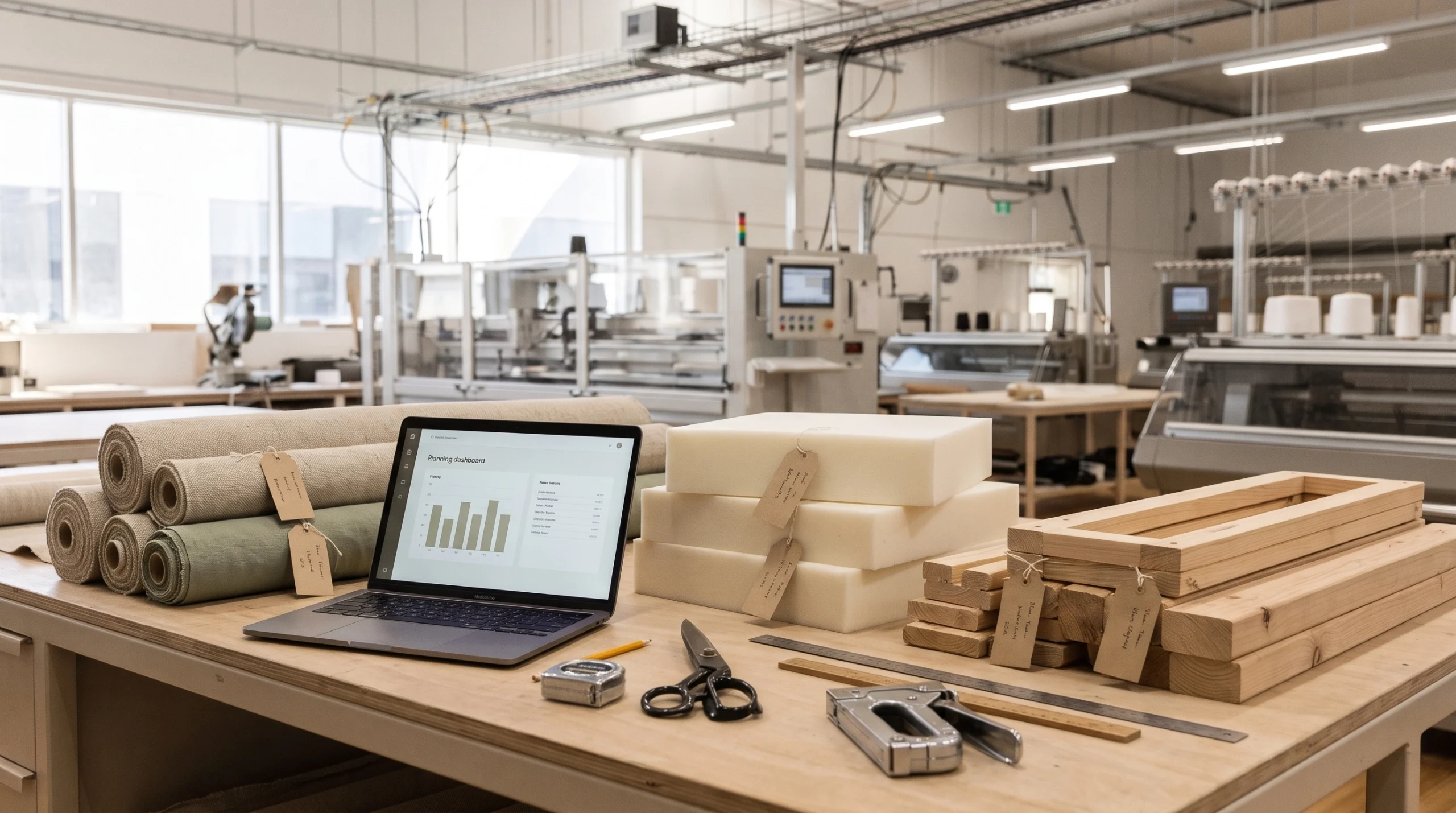
The forecast on the bench: exactly what the next few weeks need, and nothing more.
We do not choose their materials for them. The people who build the beds know their craft far better than we do, and they source what they build with. What we give them is an accurate picture of demand. What we ask in return is uncompromising quality, because accurate quantities and quality that lasts are the two things that stop a bed becoming waste, either in the workshop or, years later, in a skip.
The effect is that materials arrive closer to the point of use, fewer components sit idle, and far less ends up as surplus stock or landfill. It also means fewer emergency deliveries from fabric mills and timber yards, which are among the least efficient journeys in the whole supply chain. An accurate forecast is one of the quietest sustainability measures in bed making, and one of the most effective.
There is a direct benefit to you as well. When the right materials are already on the bench, lead times are shorter and more reliable. That is how we can offer Rapid Delivery on a growing part of the range while reducing waste rather than adding to it.
Fewer empty miles on the road
Ask anyone who runs a delivery fleet what their most expensive journey is and they will give you the same answer: the empty one. Dead mileage, the distance a van covers with nothing on board, out to the first drop, between drops or back to base, is pure cost and pure emissions. In two-person home delivery of bulky furniture it has traditionally eaten a large share of every working day.
We attack that with prediction rather than hope, and we do it on behalf of our delivery partners rather than leaving them to work it out alone. Our routing software looks at where orders are coming from, where they are likely to come from next, and how they cluster by postcode and time window. It then builds each partner’s routes so that drops are tightly grouped, sequenced to avoid doubling back, and vans are properly loaded before they set off. Because it works from forecasts as well as confirmed orders, it can hold a delivery back a day or bring one forward to make a route properly efficient, instead of sending half-empty vans to scattered postcodes. The partner receives a finished plan. All they have to do is drive it.
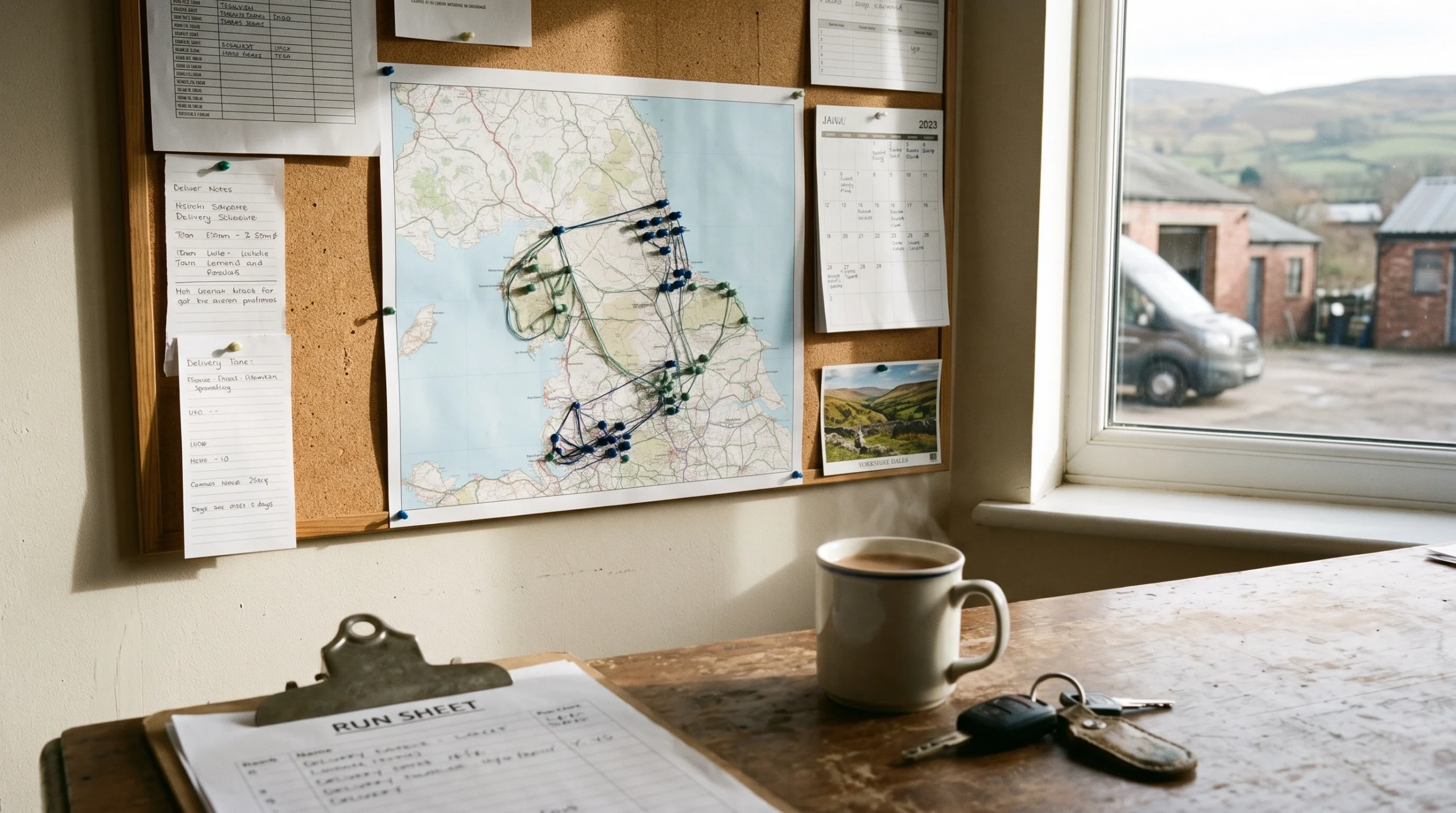
Drops grouped tightly by postcode, sequenced so no van doubles back. The plan arrives finished; the partner drives it.
The results are now measurable. Compared with 24 months ago, the average delivery partner we work with drives 24% fewer miles and completes just as many drops.
Same beds, same homes, roughly a quarter less distance to get them there.
For our delivery partners that means more deliveries per litre of diesel, less time on motorways and a more predictable day for their crews. For you it means a narrower, more reliable delivery window and fewer missed slots. For the planet it means the same number of beds reaching the same number of homes with a quarter fewer vehicle miles behind them.
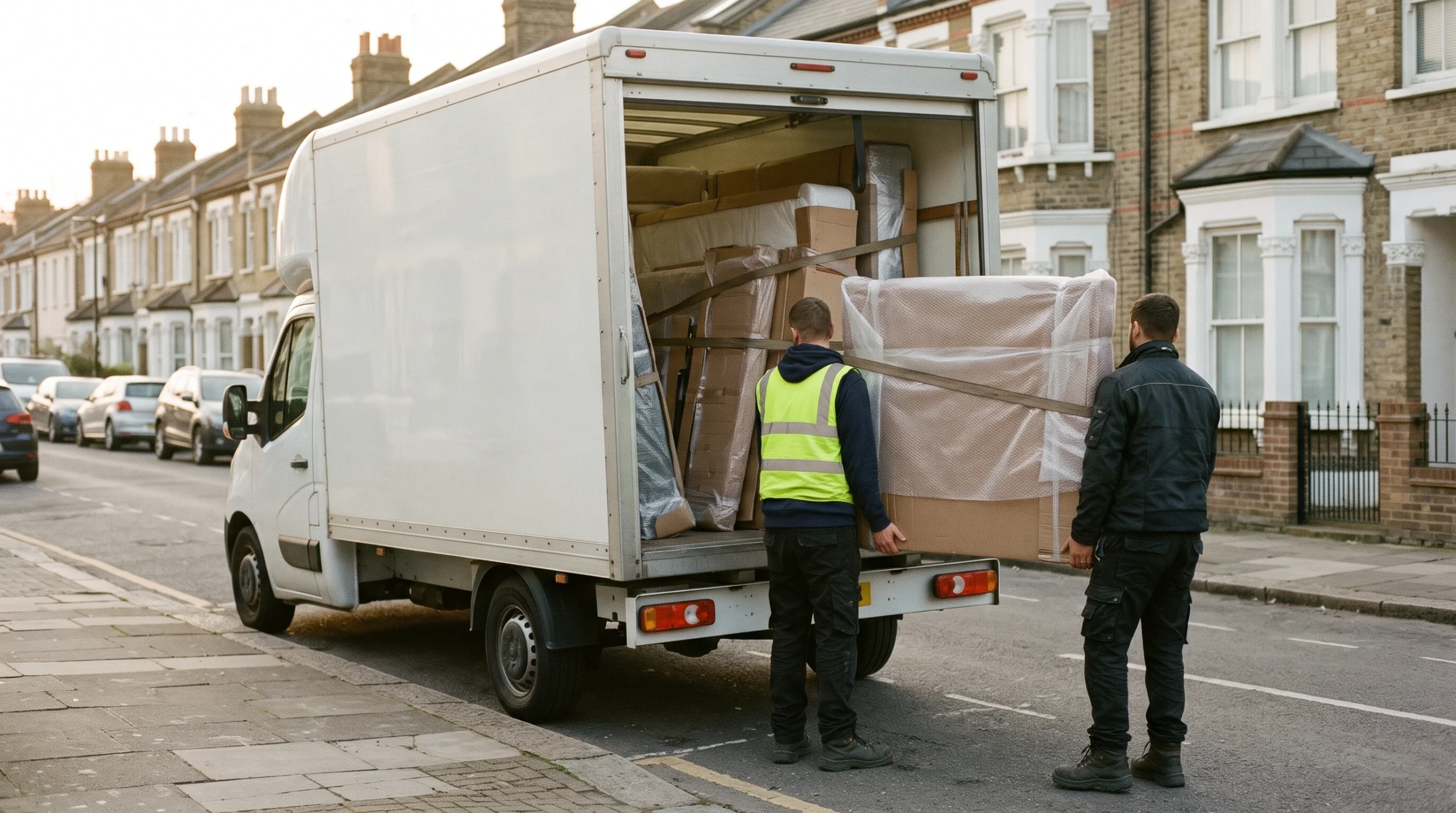
A full van and a tight route. The same beds reach the same homes with roughly a quarter fewer miles behind them.
It is also where the two technologies meet. The manufacturing forecast tells us when a bed will be ready; the route forecast tells us the most efficient day to deliver it. Line the two up and a bed moves from workshop to bedroom in one clean journey instead of sitting in a warehouse waiting for a van.
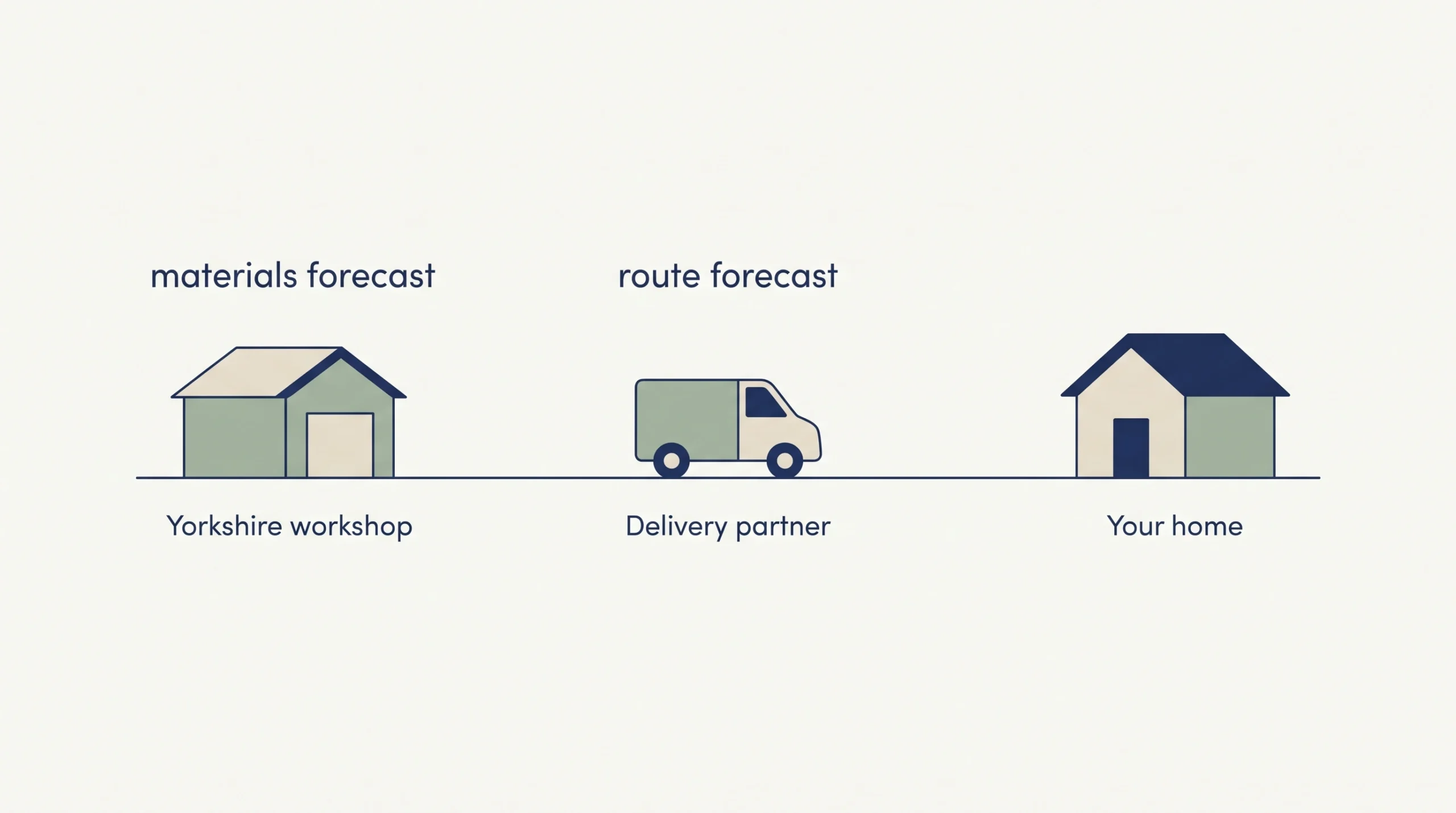
Two forecasts, one journey. The materials forecast says when a bed will be ready; the route forecast says the best day to deliver it.
Built to last, with less waste every year
The most sustainable bed is the one you do not have to replace. That is why every conversation we have about a new design starts with durability. Every bed we sell is covered by a 24-month warranty, and we specify for a life far beyond that. A bed that lasts fifteen years has a fraction of the footprint of two beds that last seven.
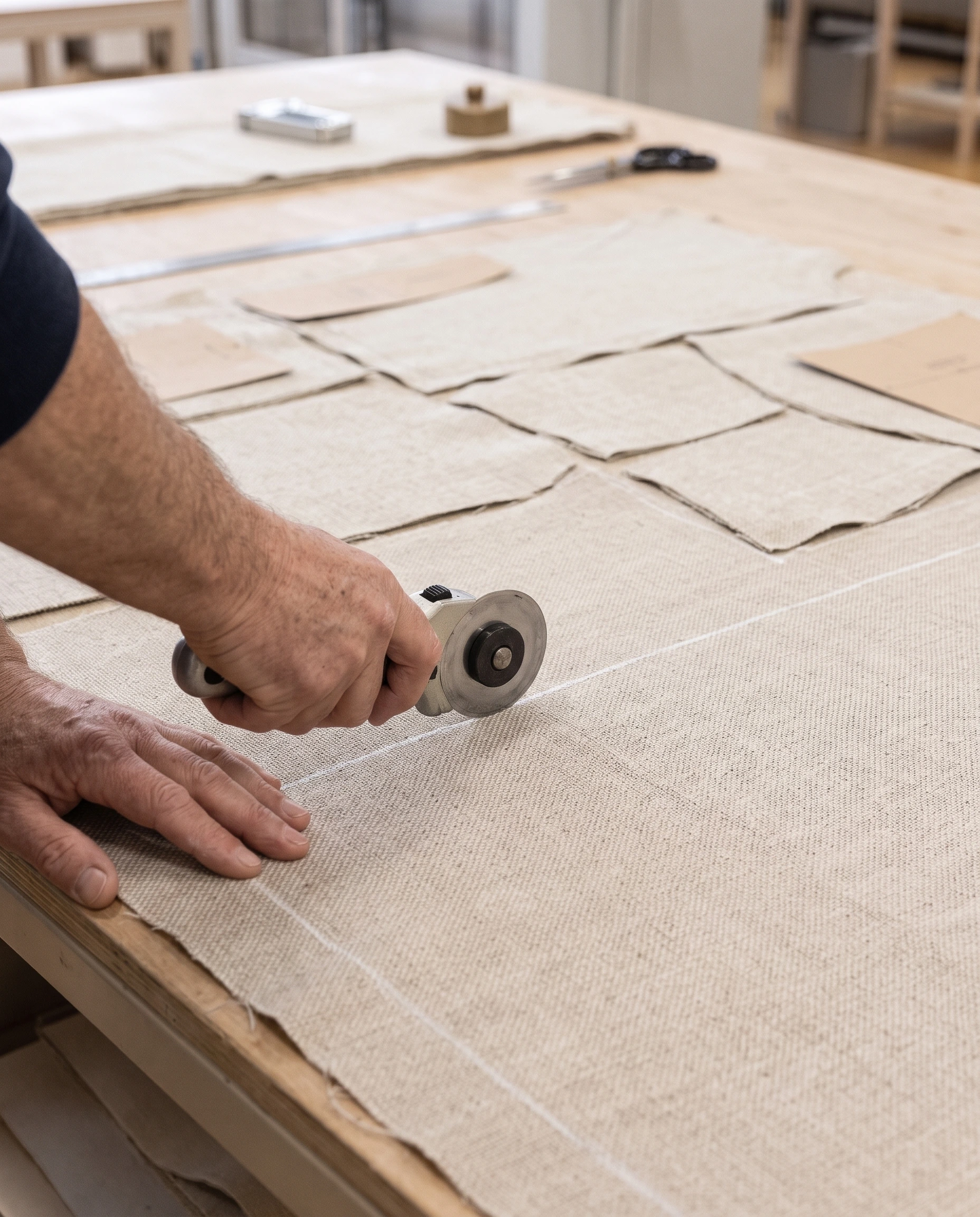
Cut to a plan, not a guess, so almost nothing is left on the bench.

Built to outlast its 24-month warranty by many years. The most sustainable bed is the one you keep.
Beyond that, we work on something less glamorous than a headline material and, we think, more useful: consistent data. Because we see the same manufacturing and delivery data week after week, across many workshops and delivery partners, we can see where waste actually comes from. Sometimes it is a fabric over-ordered for a colour that has gone quiet. Sometimes it is a component damaged in transit more often than it should be, which means a replacement part and a second van journey. Sometimes it is a route that keeps running light on a Thursday. None of these shows up in a single order. All of them show up in two years of consistent data.
We run an ongoing research programme into exactly this, and we do not keep the findings to ourselves. What we learn goes back to the people who can use it: the smaller workshops that do not have a data team, the larger factories with the scale to act on it, and the delivery partners across the country who carry the beds. Waste in this industry is rarely one big problem. It is hundreds of small ones, and consistent data is how you find them and keep finding them.
We are clear about where this is. It is a programme, not a finished product. What we can say is that every workshop and delivery partner we work with has a sharper picture of demand than it had two years ago, that the data improves every month, and that quantities planned accurately are materials that are not wasted.
One small thing you can do plays into this too. If you want to see and feel a fabric before you order, we will post free samples to your home. A customer who has held the fabric is a customer who very rarely sends a bed back, and a bed that is not returned is a van journey that never happens.
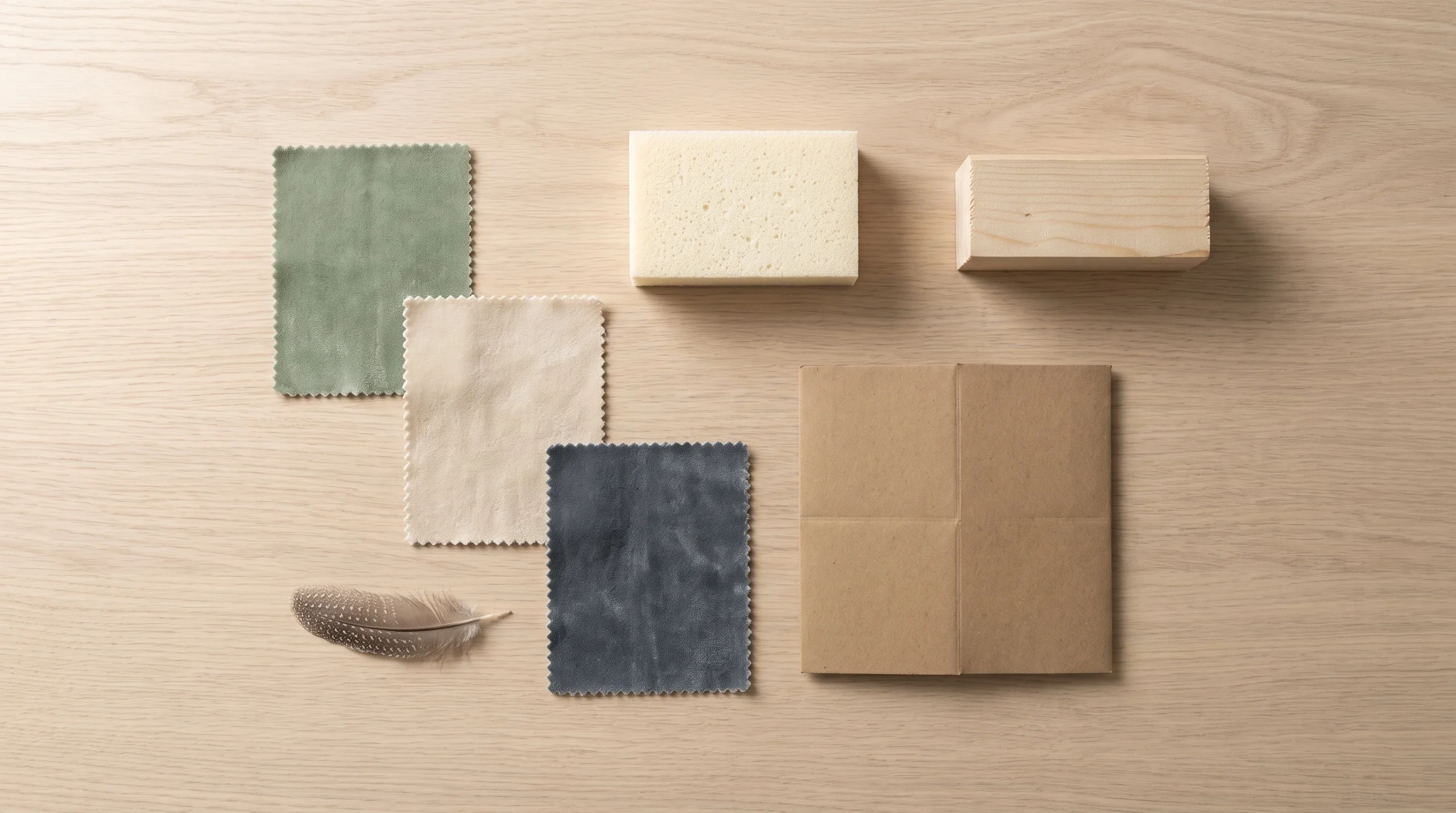
See and feel the fabric first. Free samples mean the bed you receive is the bed you wanted, and no second van journey.
Made in Yorkshire, not shipped across the world
A large share of the beds sold online in the UK are made thousands of miles away, packed flat into containers, shipped across oceans, trucked to a port warehouse and driven again to a regional depot before anyone thinks about the final delivery. Each leg adds emissions, packaging and the risk of damage, and the whole chain is exposed to the congestion and disruption global shipping has seen in recent years.
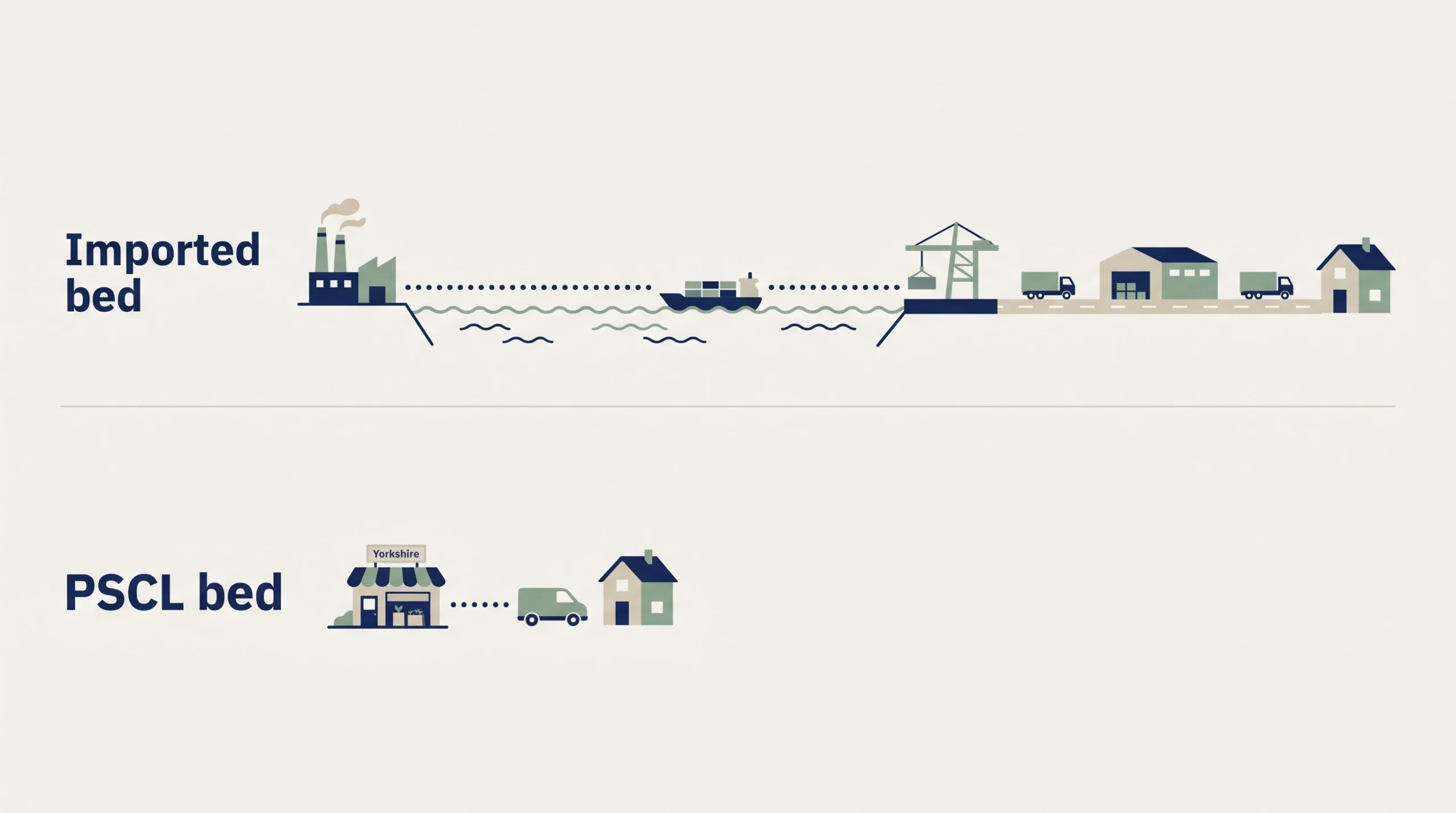
Two journeys compared. An imported bed crosses an ocean and passes through a port, a warehouse and two lorries before the final van. A PSCL bed goes workshop, van, home.
Every PSCL bed is handmade in Yorkshire and delivered by partners based in the same part of the country. The headboard, the base, the storage mechanism and the finishing all happen within a short drive of each other, and then a short drive again to most of the homes we deliver to. There is no ocean crossing, no container yard and no empty container going back the other way. That is a shorter, cleaner journey from raw material to bedroom, and it takes strain off a global shipping network that does not need another bed on it.
Making locally also makes the technology work harder. A forecast is only useful if it can be acted on quickly, and a routing plan is only useful if the vans start close to the customer. Because the making and the delivering both happen in Yorkshire, a change in demand on a Monday can be a change on a workshop floor by Wednesday and a bed on a van the following week. Try doing that with a factory on another continent.
And it keeps skilled work in British manufacturing. Every bed we sell supports upholsterers, frame makers and drivers in Yorkshire, which is why we have committed to selling only British-made beds, and why we have written before about why PSCL Beds chose to stay British.
What Sleep Lighter means for you
None of this asks you to compromise. You do not pay a premium for the lower-carbon version of a bed, because there is no separate version. The forecasting, the routing and the research apply to every bed we sell. You get the same handmade quality, the same 24-month warranty and the same choice of fabrics and configurations. What changes is what happens before the van arrives.
You will start to see the Sleep Lighter mark across our site over the coming months, on product pages and here in the journal, as we publish more about each part of the programme. We will keep sharing the numbers as they mature, as we have with the 24% reduction in partner mileage, including how far accurate planning has cut surplus stock in the workshops. We would rather show progress than make promises.
If you are choosing a new bed and the footprint matters to you, here is the simple version. Buy once, buy well, and buy from a place you can point to on a map. We will take care of the rest.
Sleep Lighter: your questions answered
What is Sleep Lighter?
Sleep Lighter is the name for the way PSCL Beds runs its supply chain: forecasting demand so the Yorkshire workshops that make our beds order the right quantities, planning delivery routes so our partners drive fewer empty miles, and specifying every bed to last. It applies to every bed we sell, not a separate range.
Do I pay more for a lower-carbon bed?
No. There is no “eco” version at a higher price. The same planning sits behind every bed, so you get the same handmade quality, the same 24-month warranty and the same choice of fabric and storage, whatever you spend.
Are PSCL beds made in the UK?
Yes. Every bed we sell is handmade in Yorkshire and delivered by partners based in the same region. We have committed to selling only British-made beds, so no bed of ours crosses an ocean in a container.
Does smarter routing mean my delivery takes longer?
Usually the opposite. Because the routing works from forecasts as well as confirmed orders, routes are planned before beds leave the workshop, which gives you a narrower, more reliable delivery window and fewer missed slots. Standard delivery is still 5 to 10 working days to most UK mainland addresses, and selected designs are available on Rapid Delivery in 3 to 5 working days.
How can I keep my own footprint down when buying a bed?
Order free fabric samples first so the bed you receive is the bed you wanted, choose a design you will keep for many years rather than a trend, and buy a bed made in this country. If you need storage, an ottoman base means one piece of furniture doing the job of two.
Buy once, buy well, and buy from a place you can point to on a map.
Browse the range of beds handmade in Yorkshire, or order free fabric samples and see the materials for yourself before you decide.
PSCL Beds is rated 5.0 on Trustpilot from more than 2,500 independent reviews. Every bed is handmade to order in Yorkshire and covered by a 24-month warranty. Delivery is free to UK mainland addresses; the Professional Bed Assembly Service is an optional paid extra.
The 24% mileage figure compares the average delivery partner’s miles per completed drop over the latest 12 months with the same measure 24 months earlier. We will update it here as the programme matures. Need a bed sooner? See the Rapid Delivery range.