
Eco-friendly
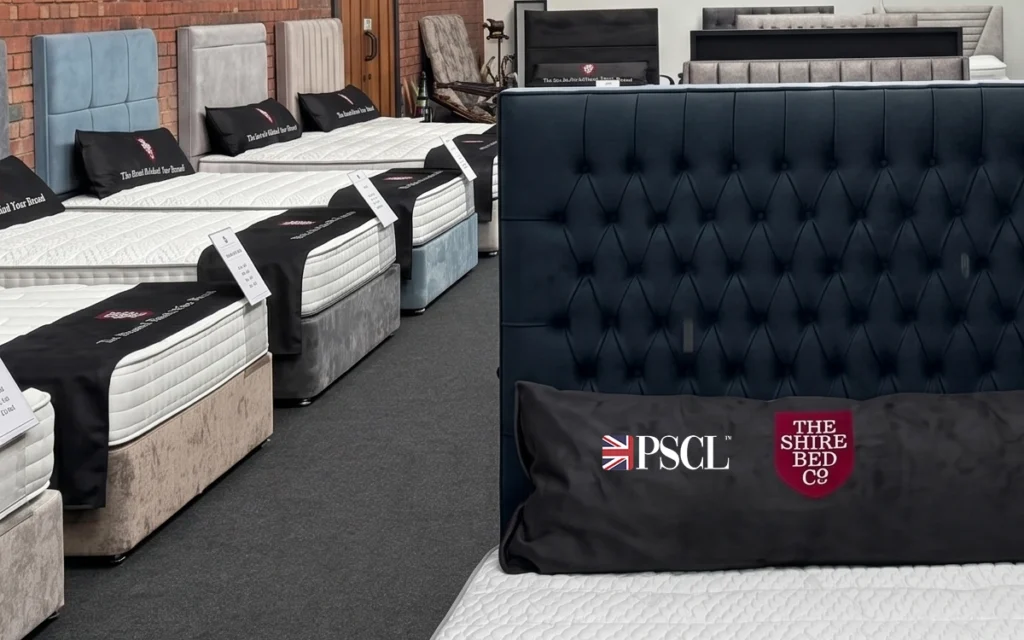
PSCL Beds and Shire Beds: A Yorkshire Partnership Built on Craftsmanship

On 2 January 2026, PSCL Beds entered into a strategic partnership with The Shire Bed Company, one of Yorkshire’s most respected and longest established bed manufacturers. Six months in, the partnership has been a huge success. We have sold hundreds of mattresses to customers across the UK, and the feedback has been outstanding.
In this article we explain who Shire Beds are, why we chose to partner with them, and what the partnership means for anyone buying a handmade bed or mattress from PSCL Beds.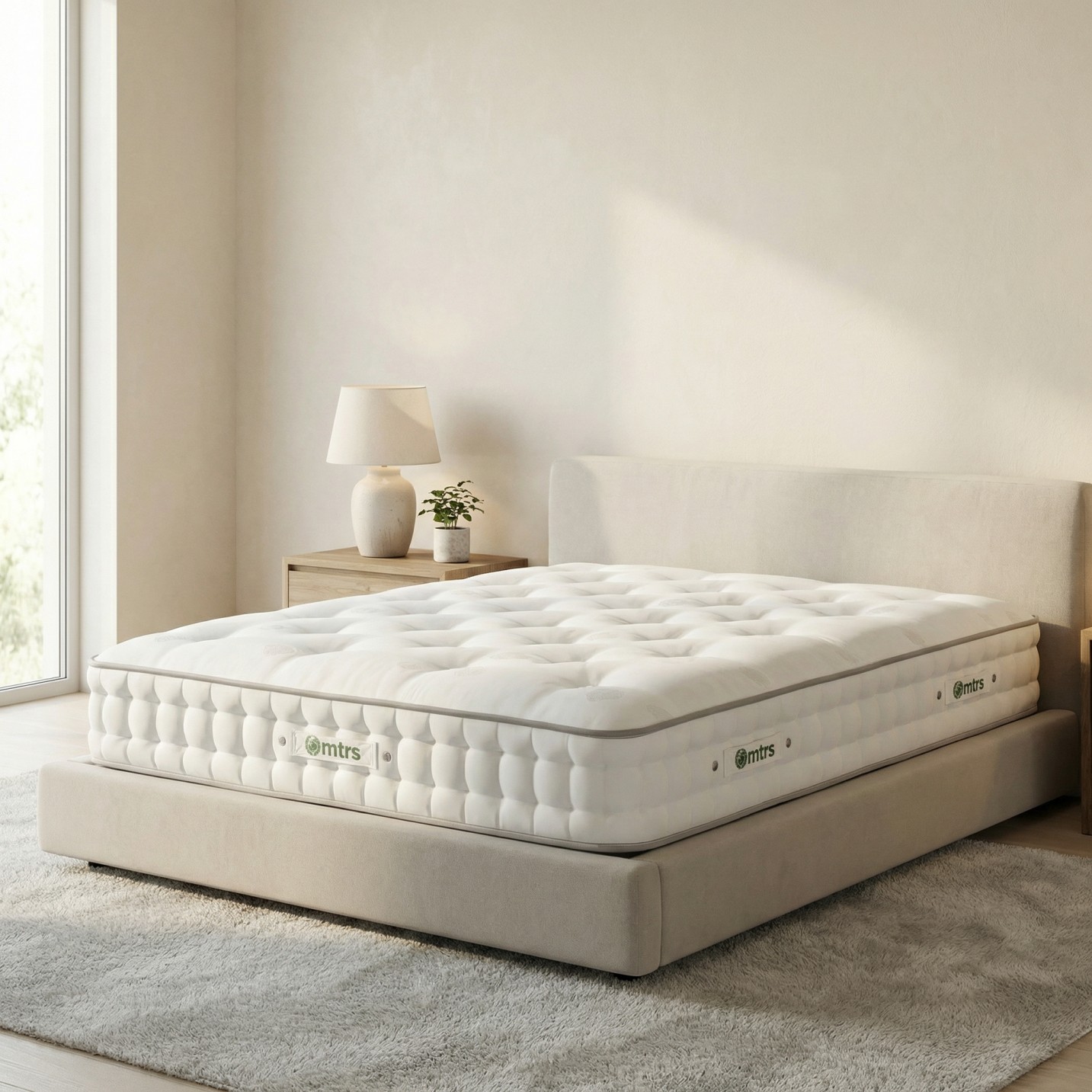
PSCL Beds upholstered bed frame with Shire Beds mattress, handmade in Yorkshire
Who Are Shire Beds?
Shire Beds are a multi-award winning, family run bed and mattress manufacturer based in Dewsbury, West Yorkshire, a town with a proud textile and bed making heritage stretching back generations. Established in 1997, Shire Beds have spent nearly three decades perfecting the craft of British bed making, combining traditional handcrafting techniques such as hand side-stitching and tufting with modern sleep technology.
Their reputation speaks for itself. Shire Beds supply some of the UK’s best known retailers, and their Signature Collection was named National Bed Federation Product of the Year. When customers ask us who makes the mattresses behind PSCL Beds, the answer is one we are genuinely proud to give.
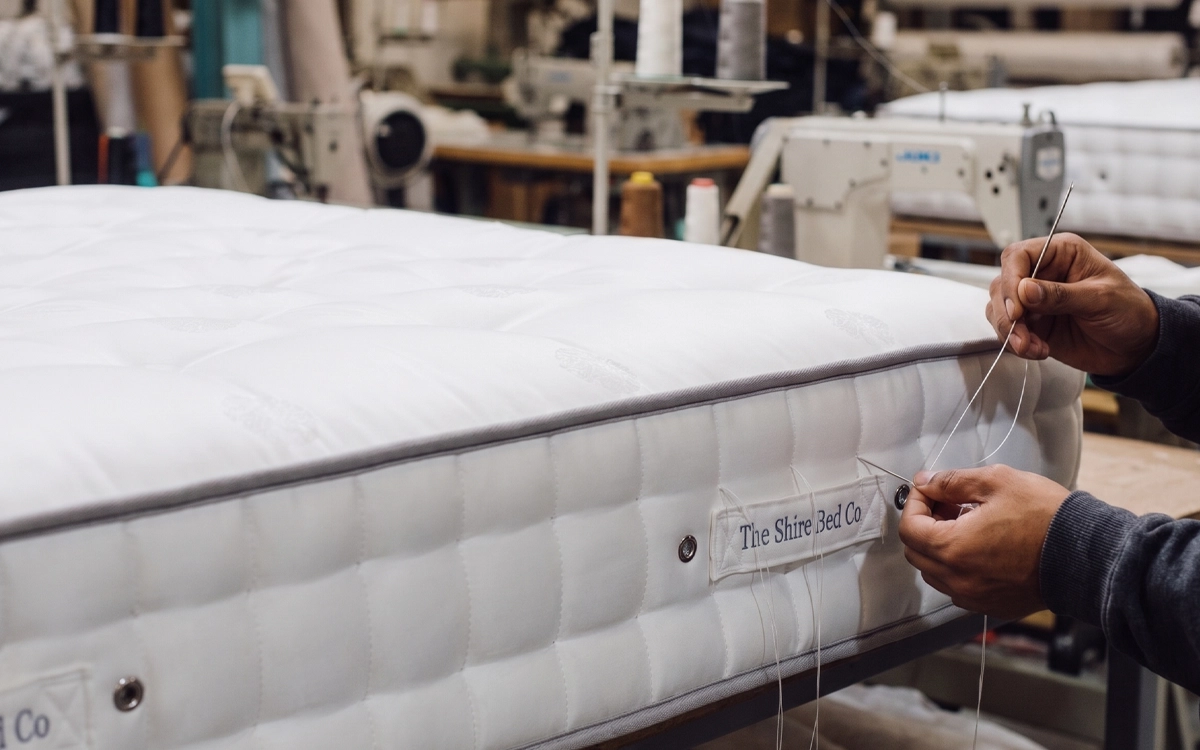
Shire Beds craftsperson hand stitching a pocket sprung mattress in Dewsbury, Yorkshire
Why PSCL Beds Chose Shire Beds
PSCL Beds was built on a simple promise: luxury beds, handmade in Yorkshire, at honest prices. Choosing a mattress partner was never going to be a decision we took lightly. We assessed several British manufacturers against strict criteria covering build quality, materials, consistency, delivery reliability and sustainability.
Shire Beds stood out on every measure:
Genuine Yorkshire craftsmanship. Every mattress is made in Dewsbury by skilled bed makers, many with decades of experience. This is not assembly line production. It is proper British bed making.
Quality of materials. From high count pocket springs to natural fillings including wool and cotton, Shire Beds work only with materials that meet the standard our customers expect.
Award winning pedigree. Independent industry recognition, including National Bed Federation awards, gave us confidence that we were partnering with one of the best in Britain.
Shared values. Like PSCL Beds, Shire Beds are family run, plain speaking and obsessive about the details customers never see, because those details are what make a bed last.
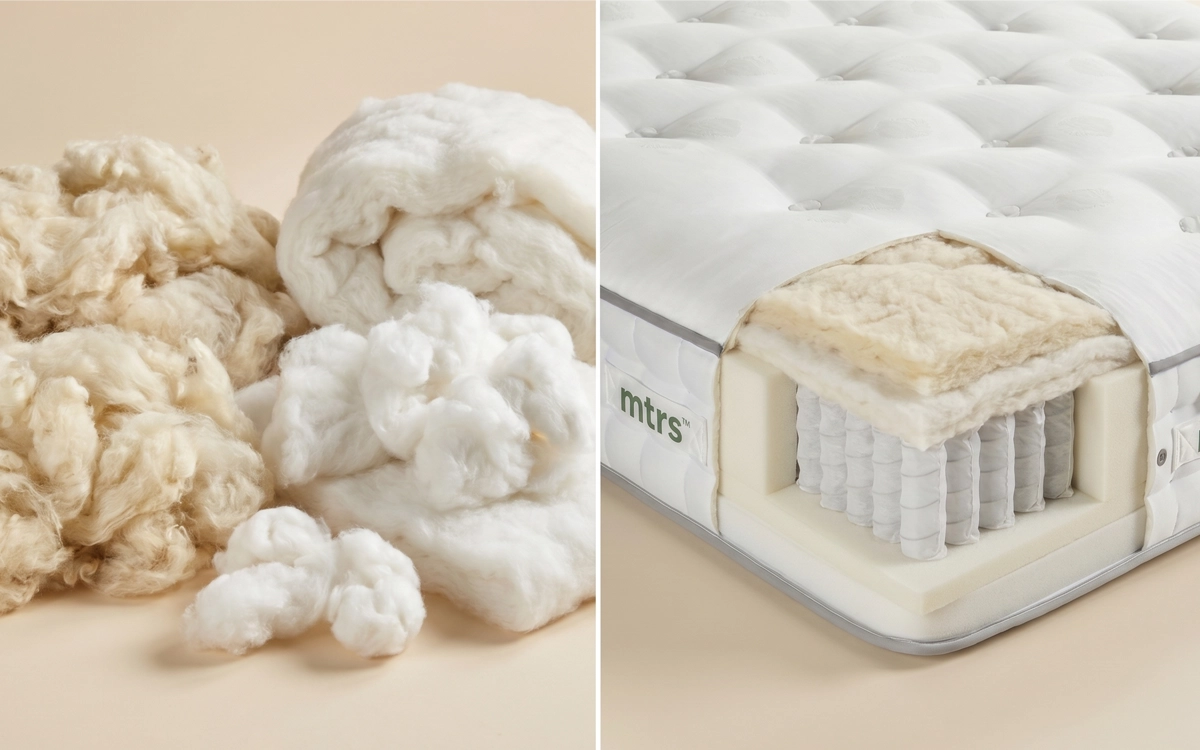
Natural wool and cotton mattress fillings used in Shire Beds mattresses sold by PSCL Beds
Which Shire Beds Ranges Do We Offer?
Our luxury mattress collection now includes designs built on Shire Beds’ celebrated Artisan and Signature ranges, offered under the PSCL Beds label. The Artisan range leads the market in encapsulated pocket spring construction, while the award winning Signature Collection features luxury high count pocket sprung mattresses with hand finished detailing.
Every mattress is made to order in Dewsbury and pairs perfectly with our handmade Yorkshire bed frames, from orthopaedic firmness through to hybrid memory comfort, in 1000, 2000, 3000 and 9000 pocket spring designs.
Browse our luxury mattress collection
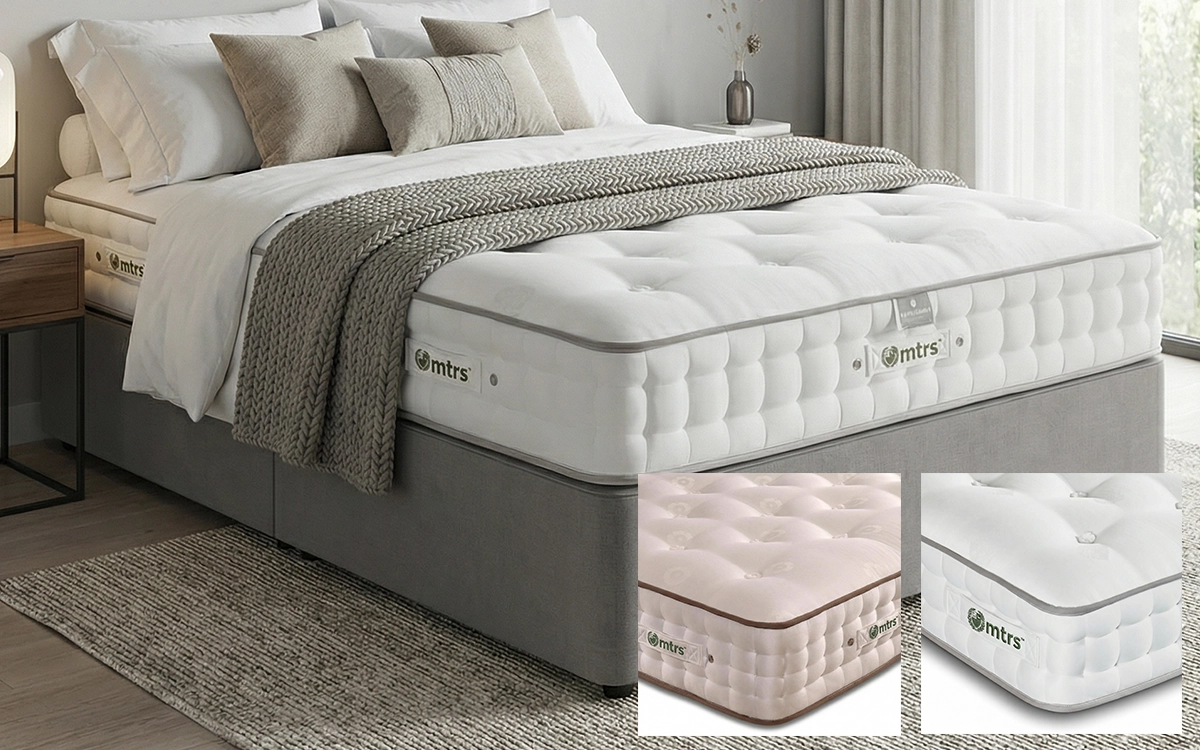
PSCL Beds luxury mattress range featuring Shire Beds Artisan and Signature designs
What the Partnership Means for Our Customers
The partnership has already delivered real improvements for PSCL Beds customers:
Better mattresses across the range. Hotel quality comfort with the durability of traditional pocket sprung construction, hand finished in Yorkshire.
Local manufacturing, reliable delivery. With mattresses made just down the road in West Yorkshire and frames handmade in Yorkshire, the entire bed arrives with the consistency only local manufacturing can deliver.
Consistent quality. Every mattress leaving Dewsbury is made to the same exacting specification, and our customer reviews tell the story.
Our customers have noticed. PSCL Beds holds a 5.0 rating on Trustpilot with more than 2,300 five star reviews, and comfort and quality are the themes that come up again and again.
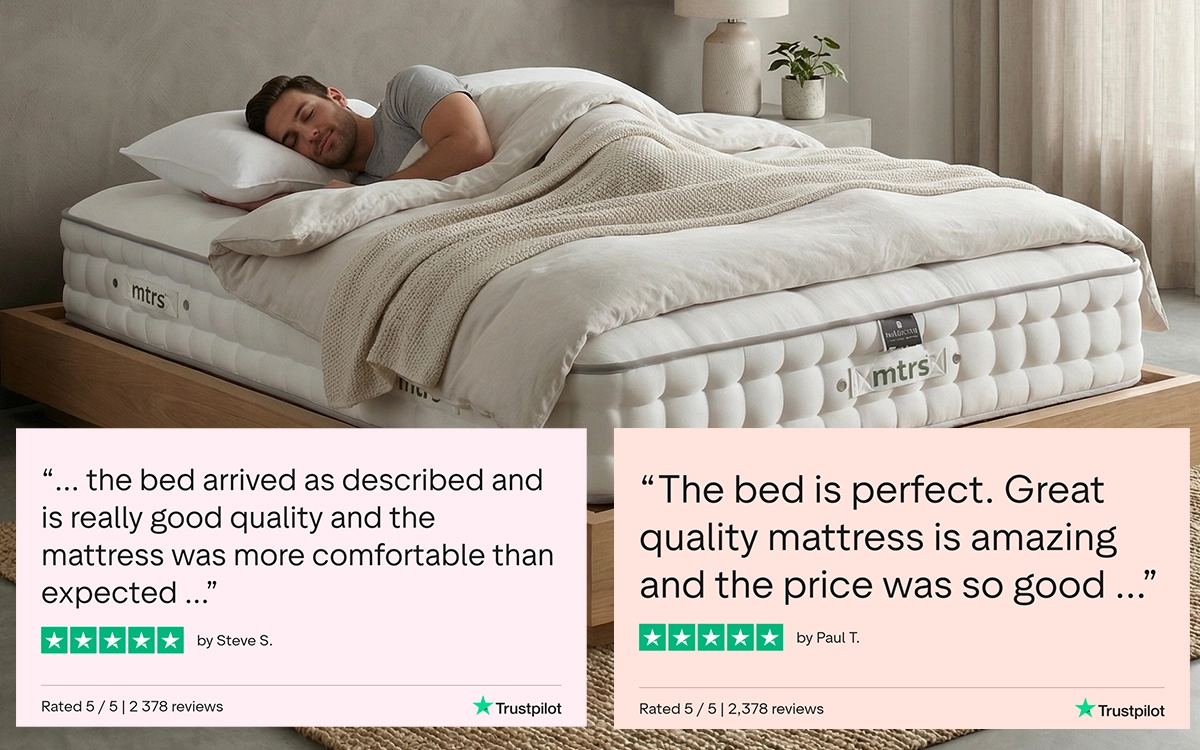
PSCL Beds 5 star Trustpilot reviews for Shire Beds mattresses
Six Months In: A Huge Success
We launched this partnership in January with high expectations, and the first six months have exceeded them. Hundreds of customers across the UK are now sleeping on mattresses born of this collaboration, and the feedback has been everything we hoped for.
Shire Beds feel the same way. Louise Hardy of The Shire Bed Company said: “It has been a great partnership so far. The PSCL Beds team share our values around quality and British manufacturing, and we genuinely enjoy working with them. We are excited about what comes next.”
We see this as a long term relationship. Two Yorkshire businesses, both committed to British manufacturing, working together to prove that you do not need to import quality. It is made right here.
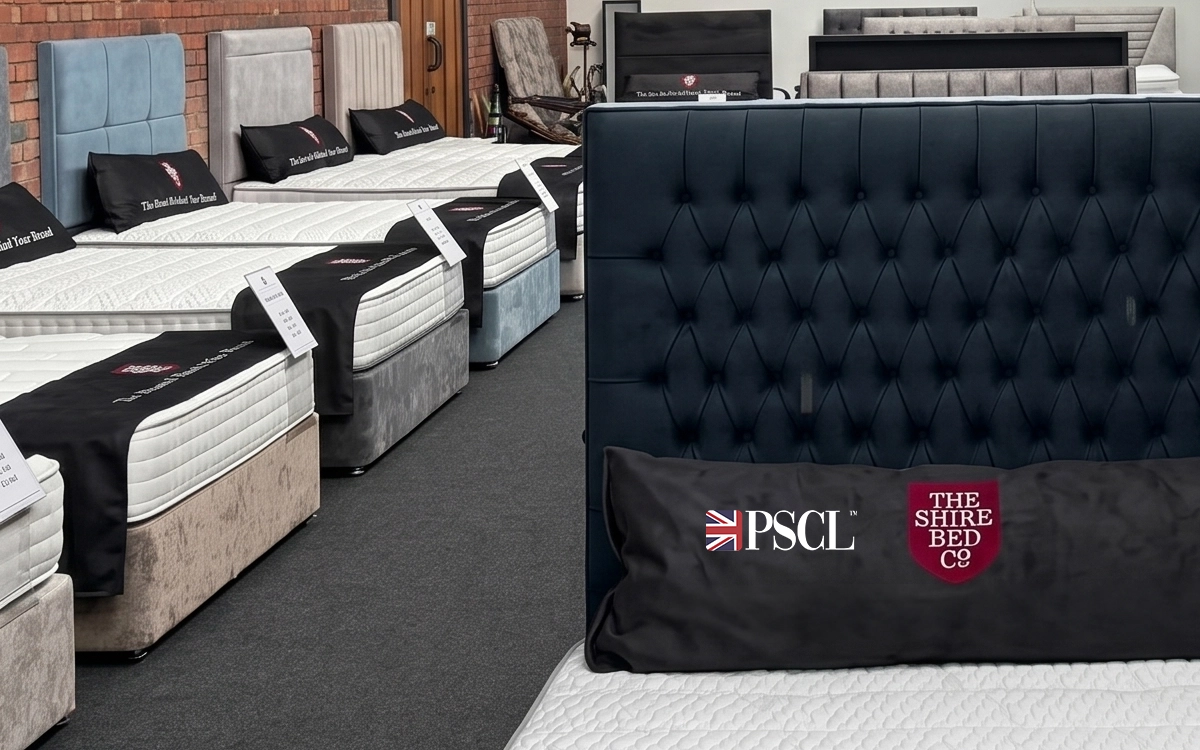
Shop Shire Beds Quality at PSCL Beds
PSCL Beds is proud to offer mattresses built on Shire Beds craftsmanship alongside our handmade Yorkshire bed frames. Whether you are looking for a pocket sprung mattress, an orthopaedic feel, or a complete bed and mattress pairing, every product is backed by Yorkshire manufacturing and our 5 star rated service.
Browse our luxury mattress collection Explore our luxury bed frames Need it quickly? See our Rapid Delivery range
Frequently Asked Questions
Are PSCL Beds mattresses made by Shire Beds? Yes. Since 2 January 2026, PSCL Beds has partnered with The Shire Bed Company of Dewsbury, West Yorkshire, an award winning British manufacturer. Our luxury mattress range includes designs built on their Artisan and Signature collections, sold under the PSCL Beds label.
Where are Shire Beds mattresses made? Shire Beds mattresses are made in Dewsbury, West Yorkshire, using a combination of traditional handcrafting techniques and modern sleep technology.
Are Shire Beds mattresses good quality? Shire Beds are a multi-award winning manufacturer whose Signature Collection won National Bed Federation Product of the Year. Their mattresses use high count pocket springs and quality natural fillings.
Can I buy a Shire Beds quality mattress with a PSCL Beds frame? Yes. Every mattress in our collection pairs with our handmade Yorkshire bed frames, and buying together ensures the perfect fit.
Do PSCL Beds deliver across the UK? Yes, we deliver nationwide, with assembly available. Contact us with any questions before ordering.
PSCL Beds: luxury beds, handmade in Yorkshire. Rated 5.0 on Trustpilot from more than 2,300 reviews.
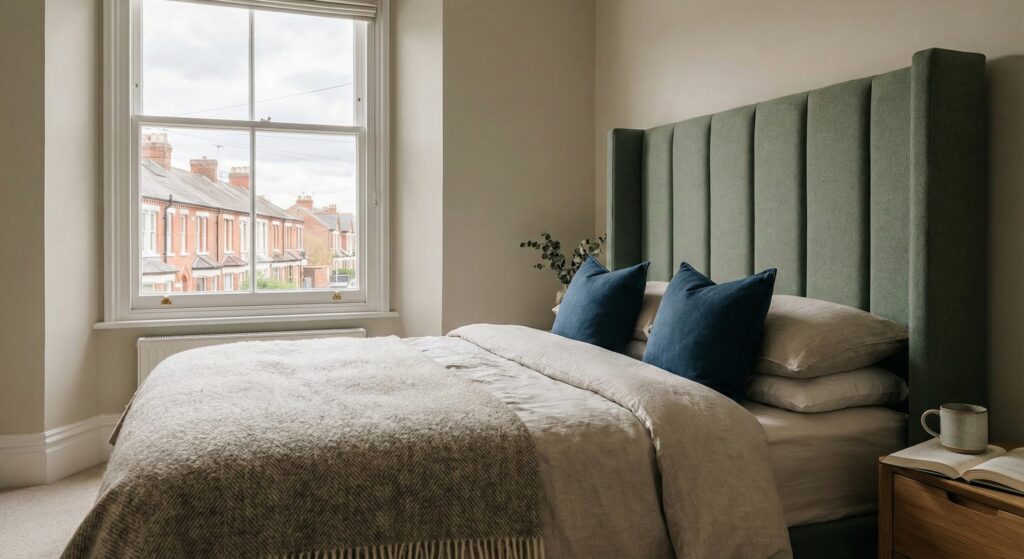
Why PSCL Beds Chose to Stay British
At PSCL Beds we often get asked why we do not sell imported beds from overseas. The answer is simple. We believe that our customers are best served with British made products that offer dependable quality, strong values and real support for the local economy.
Choosing to stay British is not just a branding choice, it is a deliberate decision about how we want to do business and what kind of product we are proud to put in your home.
Quality You Can See and Feel
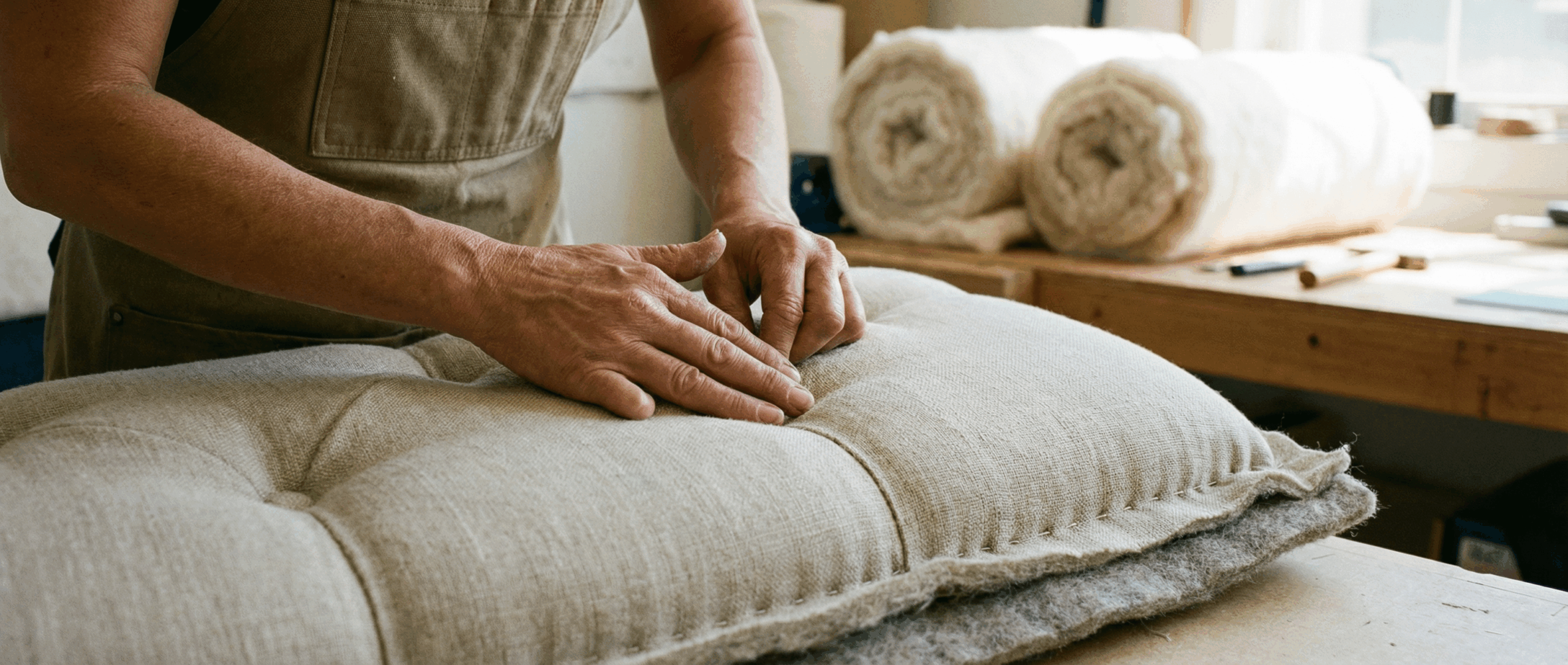
When you buy a bed, you want it to last. By working with British manufacturers, workshops and artisans, we can keep much closer control of quality.
- We know exactly who is making our beds and where they are made
- We can visit the workshops, see the materials and understand every stage of production
- We can build long-term relationships with craftsmen who take pride in their work
This level of visibility is challenging to achieve when products are sourced from multiple factories overseas. With imported goods you often rely on paperwork and promises. With British makers we rely on real people, real skills and our own inspections.
Stronger Standards and Better Materials
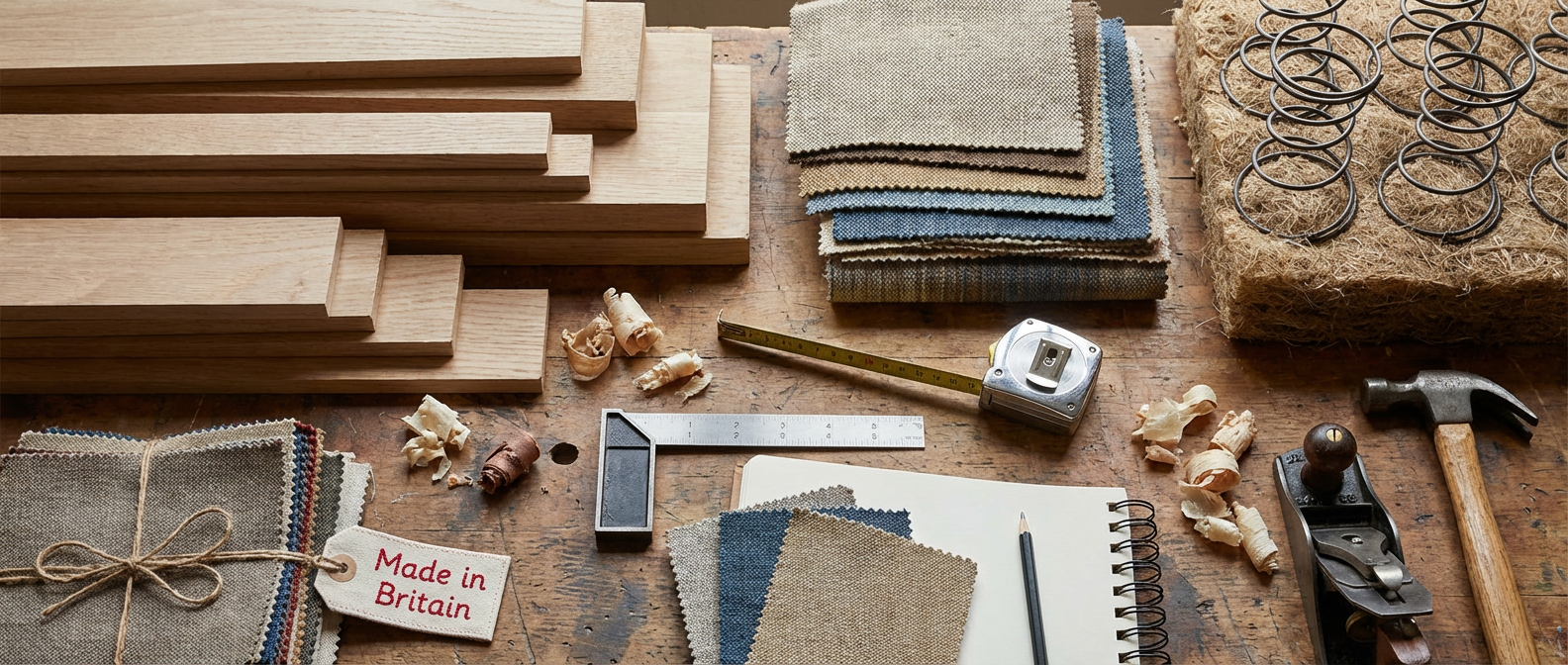
British bed makers work within strict safety and quality regulations, including fire safety standards for mattresses and upholstery. That gives you added peace of mind.
Because our supply chain is local, we can be selective about materials.
- We can insist on sturdy timber and reliable fixings
- We can choose fillings that are more supportive and longer lasting
- We can avoid the cheapest, lowest grade materials that are sometimes used to hit a price point in mass produced imports
The result is a bed that feels solid, performs properly and keeps that performance for many years, not just the first few months.
Supporting Local Workshops and Artisans
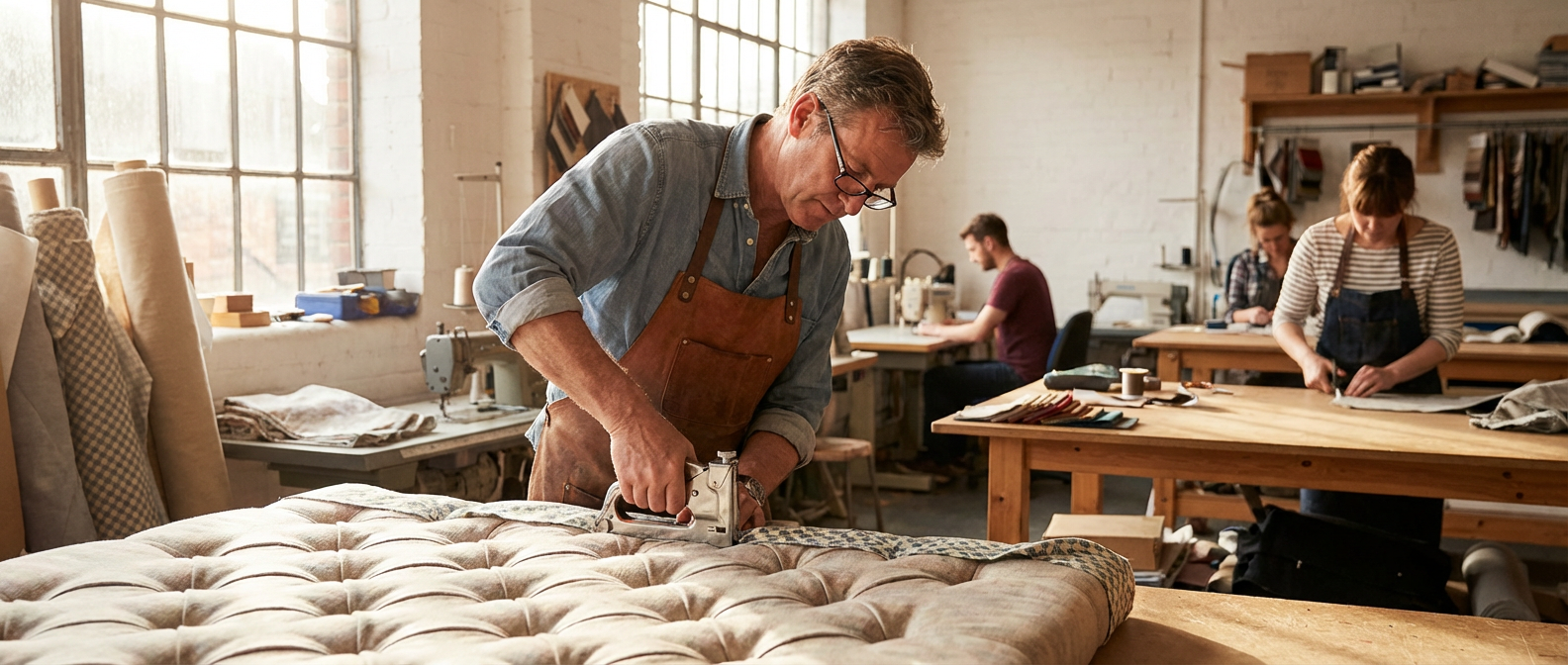
A key part of our decision is about people. At PSCL Beds we work closely with local workshops and skilled artisans who hand finish many of the products we offer.
These are small and medium sized businesses, often family run, where knowledge has been passed down over time. They understand:
- Traditional techniques such as hand tufting and careful upholstery
- How to combine modern technology with classic craftsmanship
- The pride of signing off a finished piece that will sit at the heart of someone’s bedroom
By partnering with these workshops, we help to keep those skills alive. In turn, they give us flexibility, innovation and a level of care and detail that mass production rarely matches.
Investing in the Local Economy
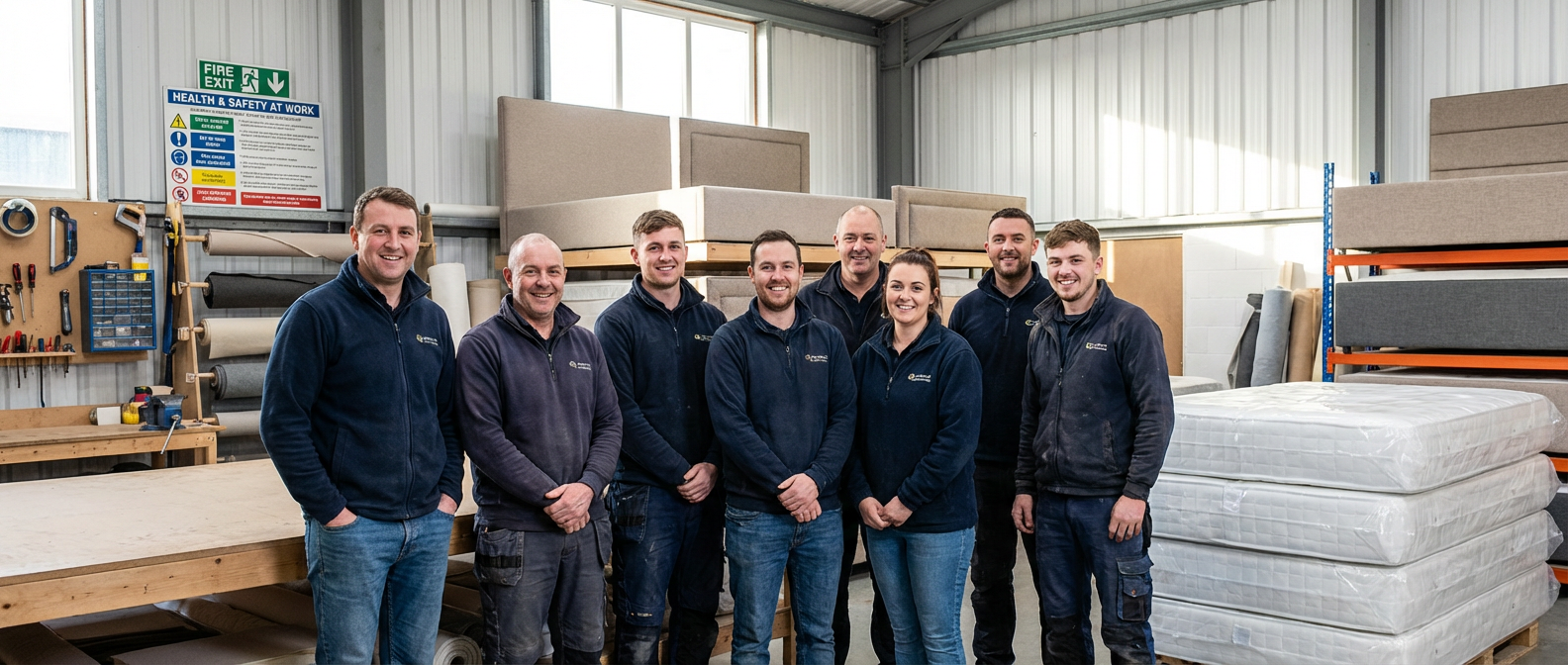
Every bed that is made in Britain supports British jobs.
- The craftsmen and women who build the frames and bases
- The upholsterers, cutters and machinists in the workshops
- The drivers, warehouse teams and support staff in the wider supply chain
Money spent on a British bed circulates in the local economy, helping other local businesses and services. When we choose not to import cheap products, we are choosing instead to keep that value at home.
For our customers, it means that your purchase has a positive impact far beyond your bedroom. You are supporting real people in real communities, not just an anonymous factory in another country.
Shorter Supply Chains, Lower Emissions
There is also a practical and environmental side to our choice.
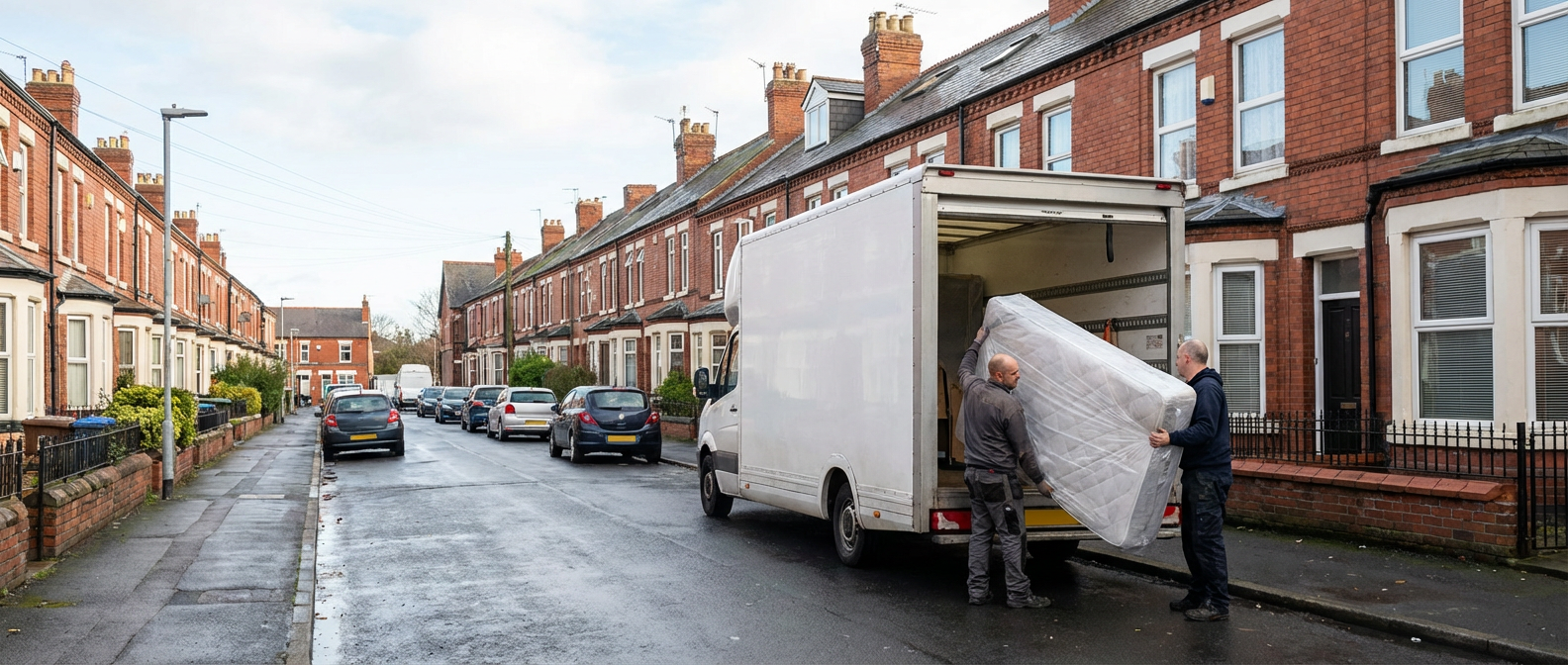
Beds are large items. Shipping them across continents uses fuel, creates emissions and adds risk of damage on long journeys. By working with British makers we keep supply chains shorter and more efficient.
- Shorter travel distances mean lower transport emissions
- Reduced handling means a lower chance of transit damage
- Faster lead times and more reliable delivery windows
For you as a customer this brings more predictable delivery, better condition on arrival and the satisfaction of choosing a more responsible option.
Better Communication and Custom Solutions
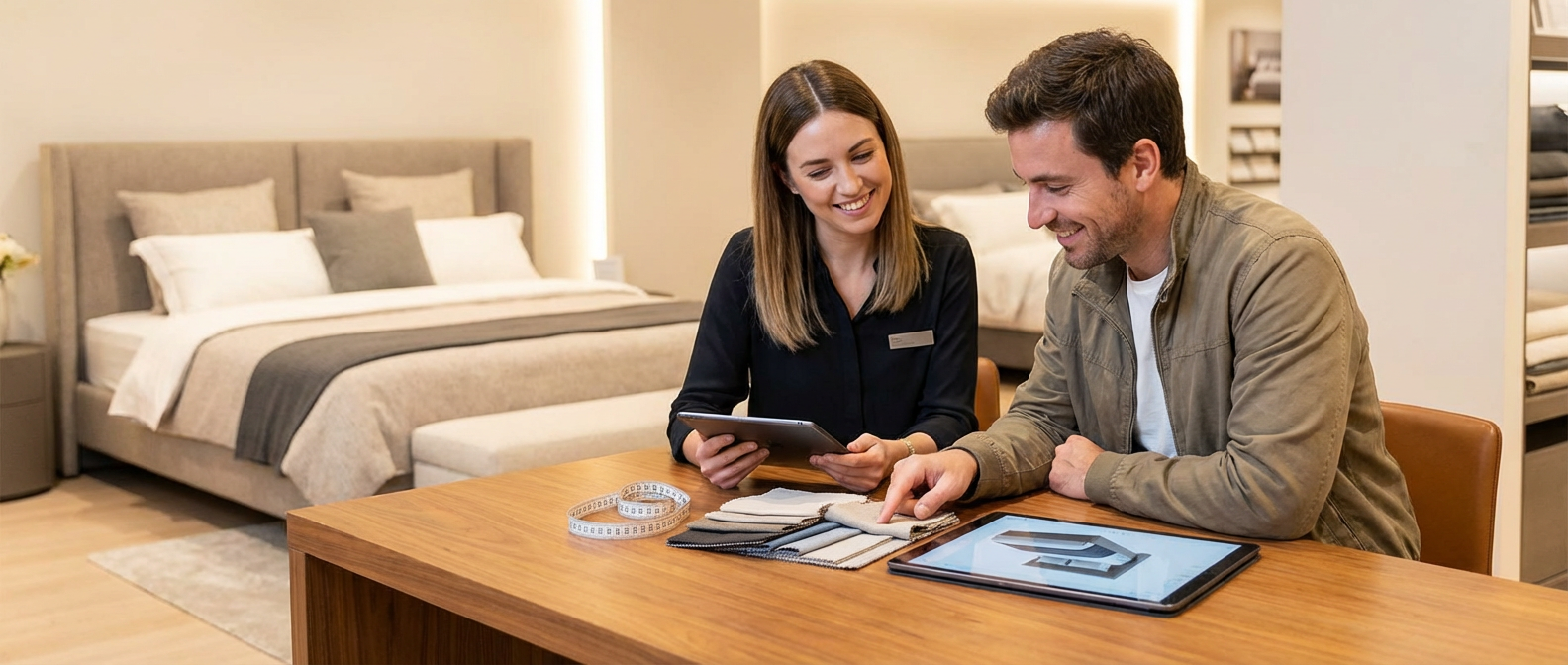
Because we deal directly with British workshops and artisans, communication is clear and fast.
- If a customer needs a specific size or adjustment, we can often arrange it
- If there is feedback on a product, it goes straight back to the people who design and build it
- If something needs improving, we can act quickly rather than waiting for long overseas cycles
This close collaboration allows us to offer options that simply do not exist with many imported ranges and it means the products can evolve with real customer feedback.
A Promise We Can Stand Behind
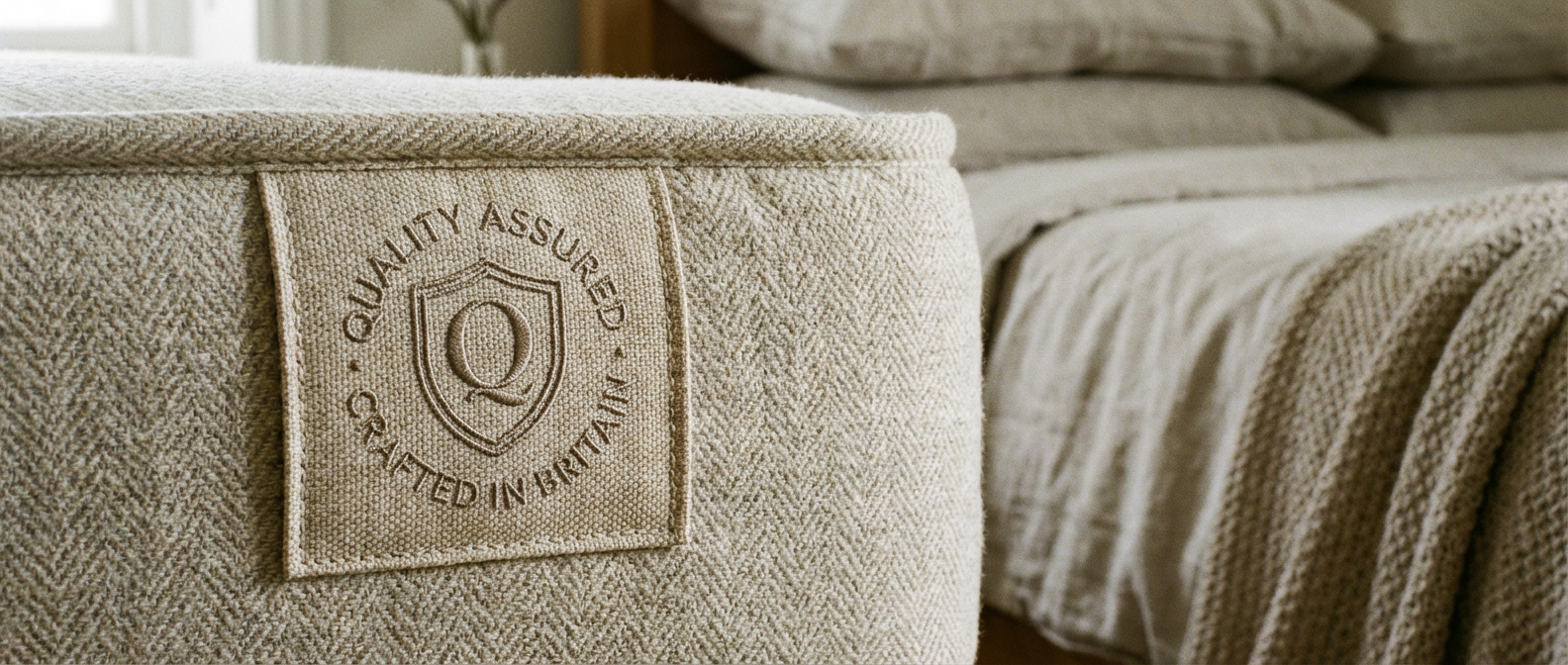
Ultimately, we decided to stay British because it allows us to stand behind every bed we sell with confidence.
We know:
- Who made it
- Where it was made
- How it was made
We know the standards it meets and the care that went into it. That makes it much easier for us to give honest advice, clear guarantees and long term support.
Final Word
At PSCL Beds we are not interested in chasing the lowest possible cost at the expense of quality, jobs and trust. By choosing British made beds and working with local workshops and artisans, we can offer products that reflect our values, not just our prices.
When you buy from us, you are investing in a well made bed, in skilled British craftsmanship and in the local economy that we are proud to be part of.
Why Upholstery Beds are Better for the Environment Than Metal Beds
Why Upholstered Beds Are Better for the Environment Than Metal Beds
Last updated: July 2026
Choosing a new bed usually comes down to comfort, style and price. More and more UK shoppers now add a fourth question: which bed is better for the environment? When you compare upholstered beds with metal beds honestly, from the raw materials to the miles travelled to how long the bed stays in your home, upholstery beds come out ahead on almost every count. In this guide we explain exactly why, without the greenwash, and cover the practical benefits you will feel every night along the way.
What is an upholstered bed?
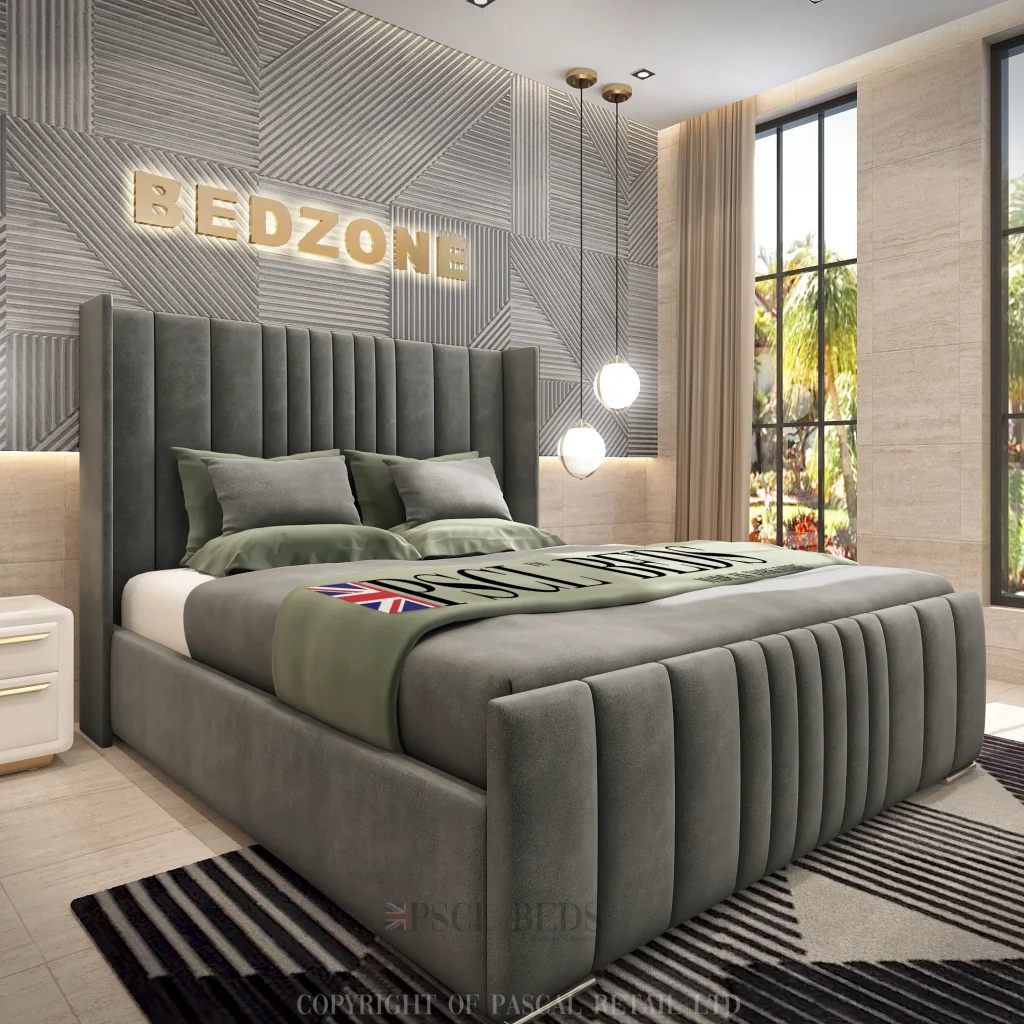
An upholstered bed (also called an upholstery bed) is a bed frame built around a sturdy timber structure, padded with cushioning and then covered by hand in fabric such as plush velvet, chenille, boucle or linen-look weaves. The headboard, base and often the footboard are all wrapped in the same fabric, giving the bed a soft, tailored, hotel-style look. A metal bed, by contrast, is a bare frame of welded or bolted steel tubing with no padding and no fabric.
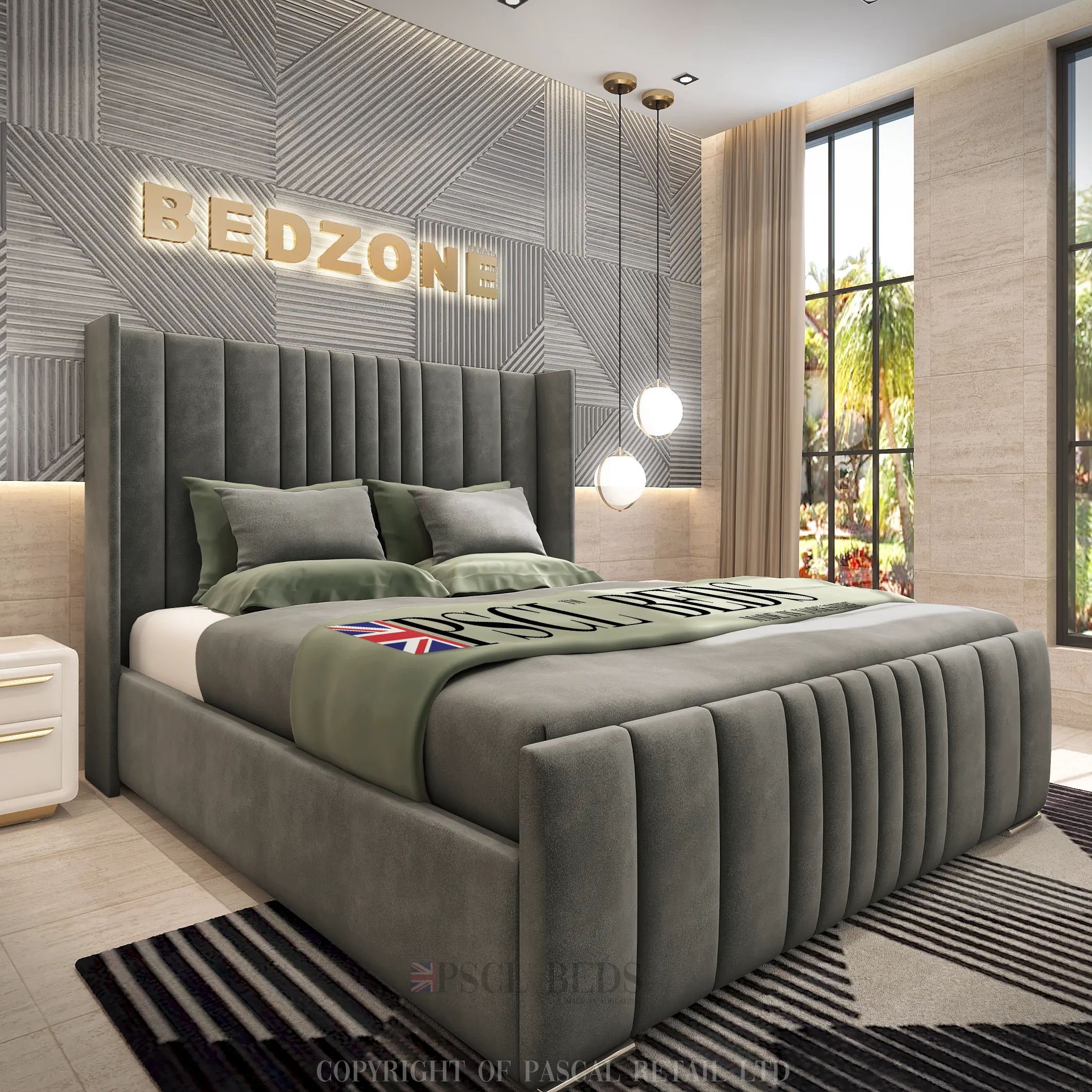
How the two types of bed are made
The environmental story starts with the raw materials. An upholstered bed frame begins life as timber, a material that grows back. The frame is cut, joined, padded and covered in fabric largely by hand, a low-energy process compared with heavy industry.
A metal bed starts as iron ore. That ore has to be mined, transported and smelted into steel in furnaces running at well over 1,000 degrees, one of the most energy-hungry industrial processes there is. Most metal bed frames sold in the UK are then mass-produced overseas and shipped here flat-packed, adding thousands of freight miles before the bed ever reaches a bedroom.
Five reasons upholstered beds are the greener choice
1. Timber is a renewable material
The structure of an upholstered bed is wood, and wood grows back. Responsibly sourced timber is one of the few construction materials that can be replenished within a human lifetime, and while a tree grows it absorbs carbon rather than releasing it. Iron ore, once mined, is gone for good, and turning it into steel releases significant carbon along the way.
2. Making new steel takes far more energy
To be fair to metal beds, steel can be recycled, and we will come back to that below. The problem is that producing new steel for mass-market bed frames consumes an enormous amount of energy compared with working timber and fabric. Cutting, joining and hand-upholstering a wooden frame simply does not carry the same energy bill as a blast furnace.
3. Made to order means nothing is built that nobody wants
Mass-produced metal beds are made in bulk, shipped in bulk and stored in bulk, and whatever does not sell is discounted, dumped or scrapped. Every PSCL upholstered bed works the other way round: it is handmade in Yorkshire only after you place your order, in the exact size, fabric and colour you choose. Nothing sits unsold, nothing is overproduced and nothing is wasted. Made to order is one of the most underrated forms of sustainability in furniture.
4. Fewer miles from maker to bedroom
A bed handmade in Yorkshire and delivered to a UK home travels a small fraction of the distance of a frame manufactured overseas, shipped by container to a port, trucked to a warehouse and then couriered out. Shorter journeys mean a smaller transport footprint, and they are also why UK-made beds arrive quicker and in better condition.
5. Built to be loved for longer
The greenest bed is the one you do not have to replace. A quality upholstered bed frame with a solid timber structure is built to take years of everyday use, and because fabric styles like plush, boucle and velvet are timeless rather than trend-led, the bed keeps looking right as your decor changes around it. Budget metal frames are notorious for working loose at the bolts, bending at the rails and squeaking their way to landfill within a few years. Longevity is an environmental feature, not just a quality one.
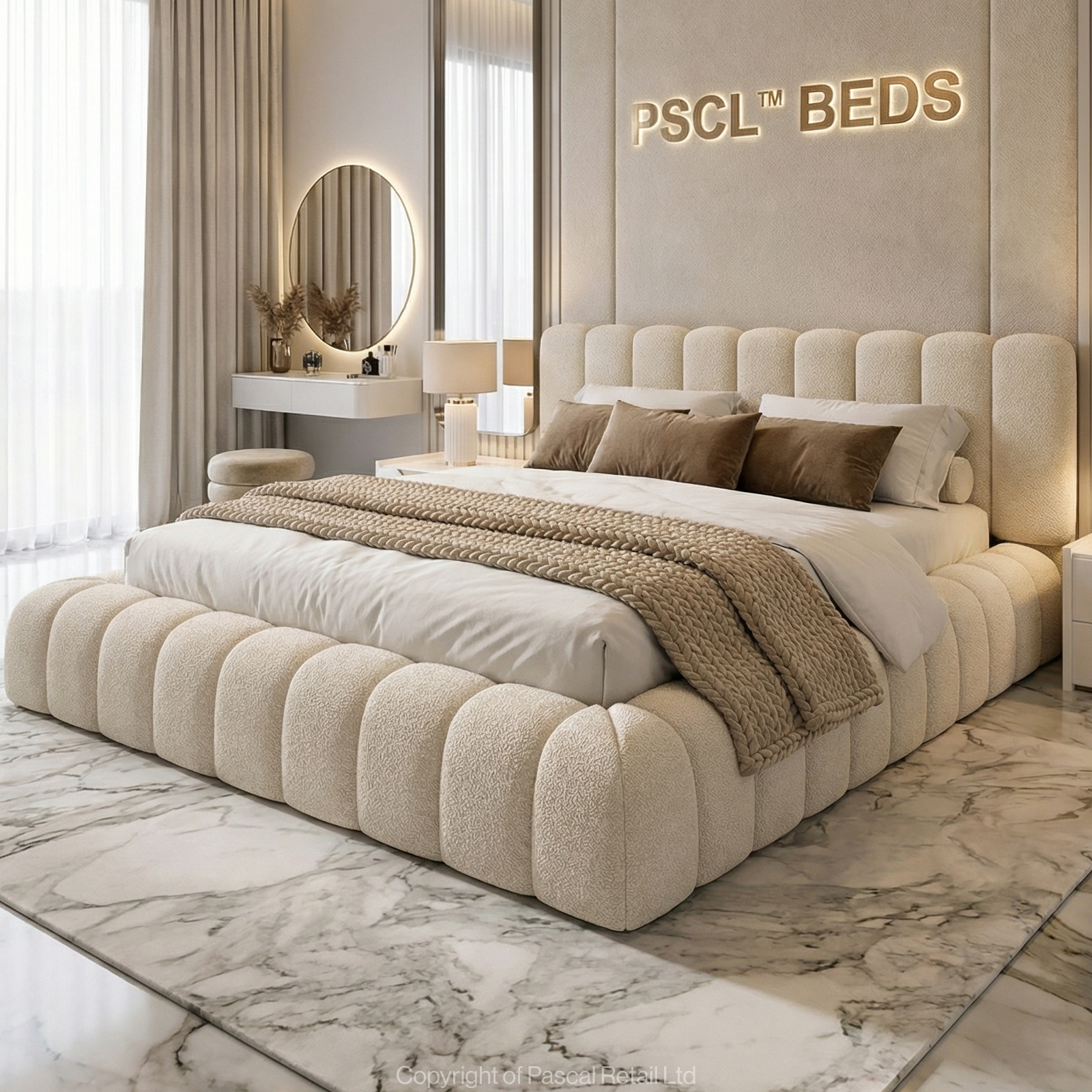
The everyday benefits you will feel
The environmental case gets an upholstered bed into the conversation. These are the reasons people never go back to metal:
- Warmth and softness. Fabric is warm to the touch all year round, while metal is cold in winter and hard whenever you brush against it. A padded headboard turns reading or watching TV in bed into something genuinely comfortable.
- Silence. Upholstered frames have padded joints and a timber structure, so there is no metal-on-metal creaking every time you turn over. Anyone who has lived with a squeaky metal frame knows exactly what this is worth.
- Safer edges. Every corner and rail is cushioned, which is kinder on shins in the dark and far more forgiving in children’s rooms than exposed steel tubing.
- A designer look. With dozens of fabrics and colours, from plush greys and creams to deep emerald and charcoal weaves, an upholstered bed frame becomes the centrepiece of the room rather than something to hide under a duvet.
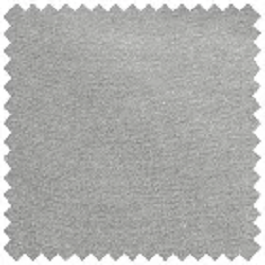

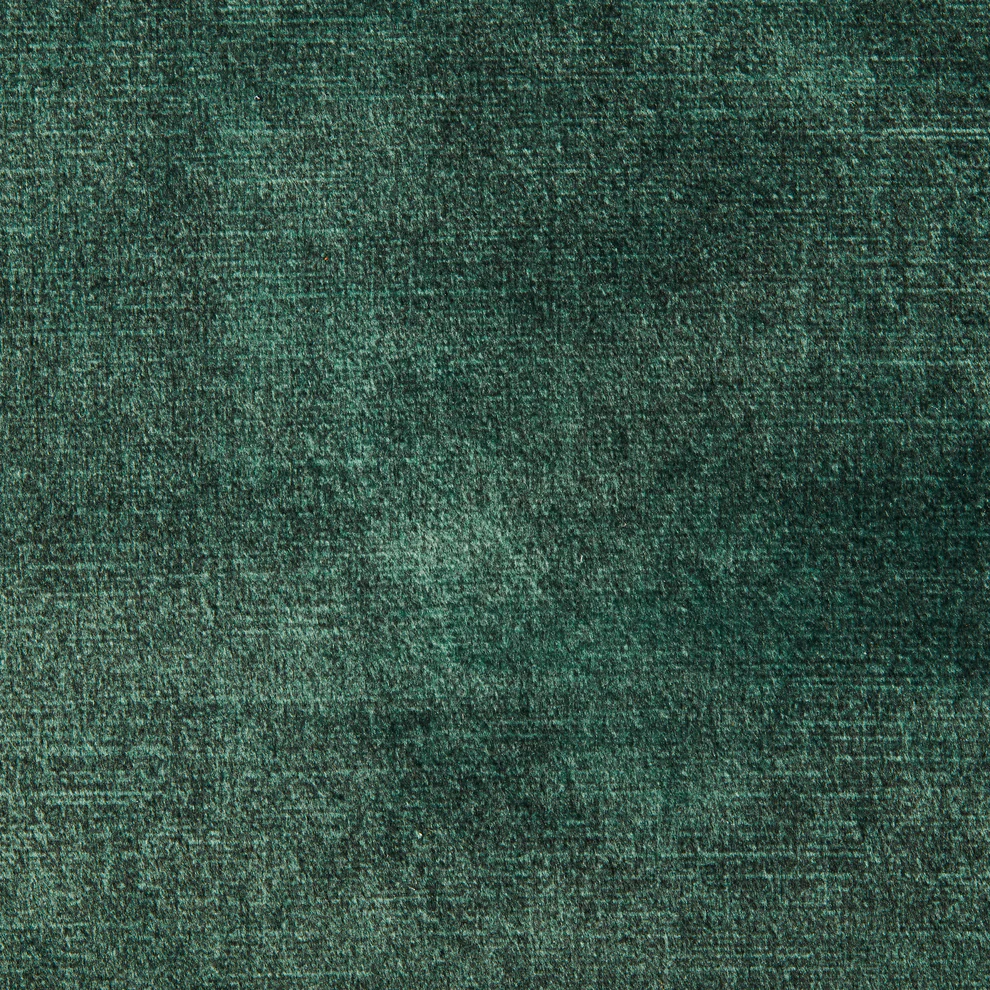
A few of the fabrics our upholstered beds can be made in. Order free fabric samples to see and feel them at home before you buy.
Storage: one piece of furniture doing the job of two
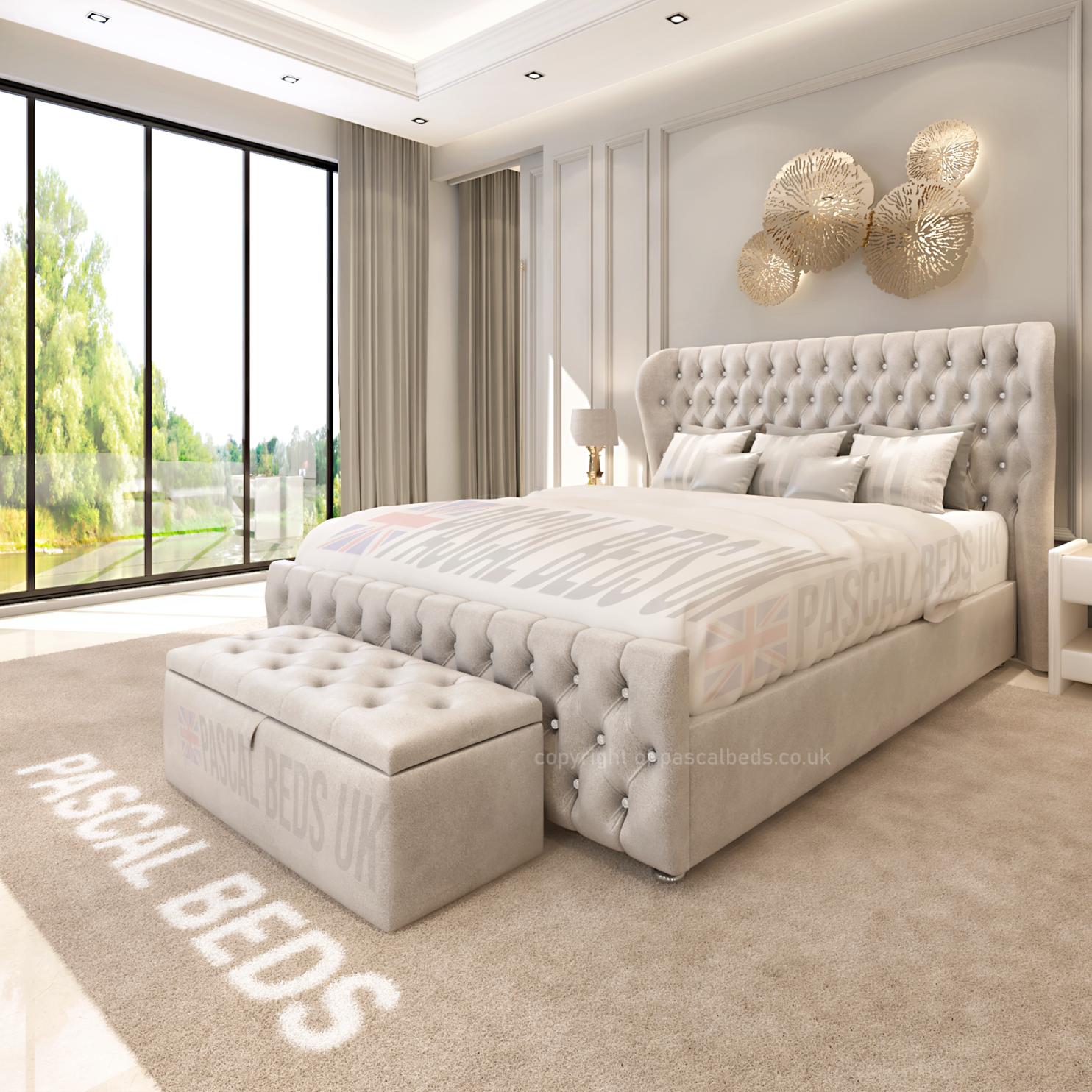
Here is an environmental advantage metal beds cannot match at all. Because upholstered beds are built on a full timber base, they can be made as ottoman storage beds, where the whole sleeping platform lifts on gas struts to reveal a huge storage space underneath. That is an entire chest of drawers or blanket box you no longer need to buy, manufacture or find floor space for. Explore our reinforced slatted ottoman beds and solid base ottoman beds to see how much space is hiding under a mattress.
A fair word on metal beds
We would rather be straight with you than one-sided. Steel is recyclable, and a genuinely well-made metal frame can serve for years, which is why we even offer a small selection of metal bed frames for those who love the look. The environmental problem is not metal itself but how most metal beds are made and sold: energy-intensive new steel, mass production overseas, long shipping routes and budget builds that fail early. If you weigh up the whole life of the bed, from raw material to how long it lasts in your home, an upholstered bed made to order in the UK is the greener buy for most people.
How to choose your upholstered bed
- Pick your size. Upholstered beds come in every standard UK size from single to super king, so measure your room and doorways first.
- Choose your fabric with samples in hand. Screens never show texture and tone perfectly, so order free fabric samples before you decide. It is the single best way to be certain about a colour.
- Decide on storage. If space is tight, an ottoman base turns the area under your mattress into your biggest cupboard.
- Think about the headboard. A tall upholstered headboard adds real presence to a room. You can also browse our upholstered headboards separately.
- Check who makes it and how it is backed. A bed handmade in the UK with a proper 24-month warranty is a very different purchase from an imported flat-pack frame.
Why buy your upholstered bed from PSCL Beds
Every PSCL upholstered bed frame is handmade in Yorkshire, made to order in your choice of size, fabric and base, and built on a solid timber structure designed to last. Our customers consistently rate us Excellent on Trustpilot across thousands of independent reviews, and they regularly praise the delivery team who bring the bed in and assemble it for you.
Buying from us includes free delivery within UK mainland, assembly by our own team, a 24-month warranty and interest-free finance so you can spread the cost. If you would like help choosing a size, fabric or storage option, message us on WhatsApp or call freephone 0800 368 7388 and we will happily talk it through before you order.
Ready to make the greener choice? Browse our full collection of upholstered luxury bed frames, or see our rapid delivery beds if you need yours sooner.
Upholstered beds vs metal beds: FAQs
Are upholstered beds better than metal beds?
For most people, yes. Upholstered beds are warmer, quieter and softer to live with, they can include gas-lift ottoman storage, and when they are made to order from timber in the UK they carry a smaller environmental footprint than mass-produced imported metal frames. Metal beds mainly win on price at the very bottom of the market.
Are upholstered beds environmentally friendly?
An upholstered bed built on a timber frame uses a renewable raw material, and when it is made to order there is no overproduction or unsold stock to waste. One handmade in Yorkshire also travels far fewer miles to reach a UK home than an imported frame. Choosing a well-made upholstered bed that lasts for many years is one of the simplest ways to lower the footprint of your bedroom furniture.
How long do upholstered beds last?
A quality upholstered bed with a solid timber structure is built to give many years of everyday use, and PSCL beds are backed by a 24-month warranty for peace of mind. Budget metal frames, by contrast, commonly loosen, bend and squeak within a few years, which is why they are replaced so often.
Are upholstered beds hard to keep clean?
No. A regular once-over with a soft brush or upholstery vacuum attachment keeps the fabric fresh, and marks can usually be spot-cleaned following the fabric care advice. Hard-wearing weaves such as plush and chenille are chosen for bed frames precisely because they cope well with daily life.
Are upholstered beds quieter than metal beds?
Yes, noticeably. Upholstered frames combine a timber structure with padded, fabric-covered joints, so there is no metal-on-metal contact to creak or rattle when you move. Squeaking is one of the most common complaints about metal bed frames as their bolted joints work loose over time.
Can you get an upholstered bed with storage?
Yes. Upholstered ottoman beds lift the entire sleeping platform on gas struts to reveal a storage space that matches the footprint of the bed, several times more than divan drawers. They are available with reinforced slatted or solid bases and in every standard UK size.