
Blog
All You Need To Know About Ottoman Storage Beds

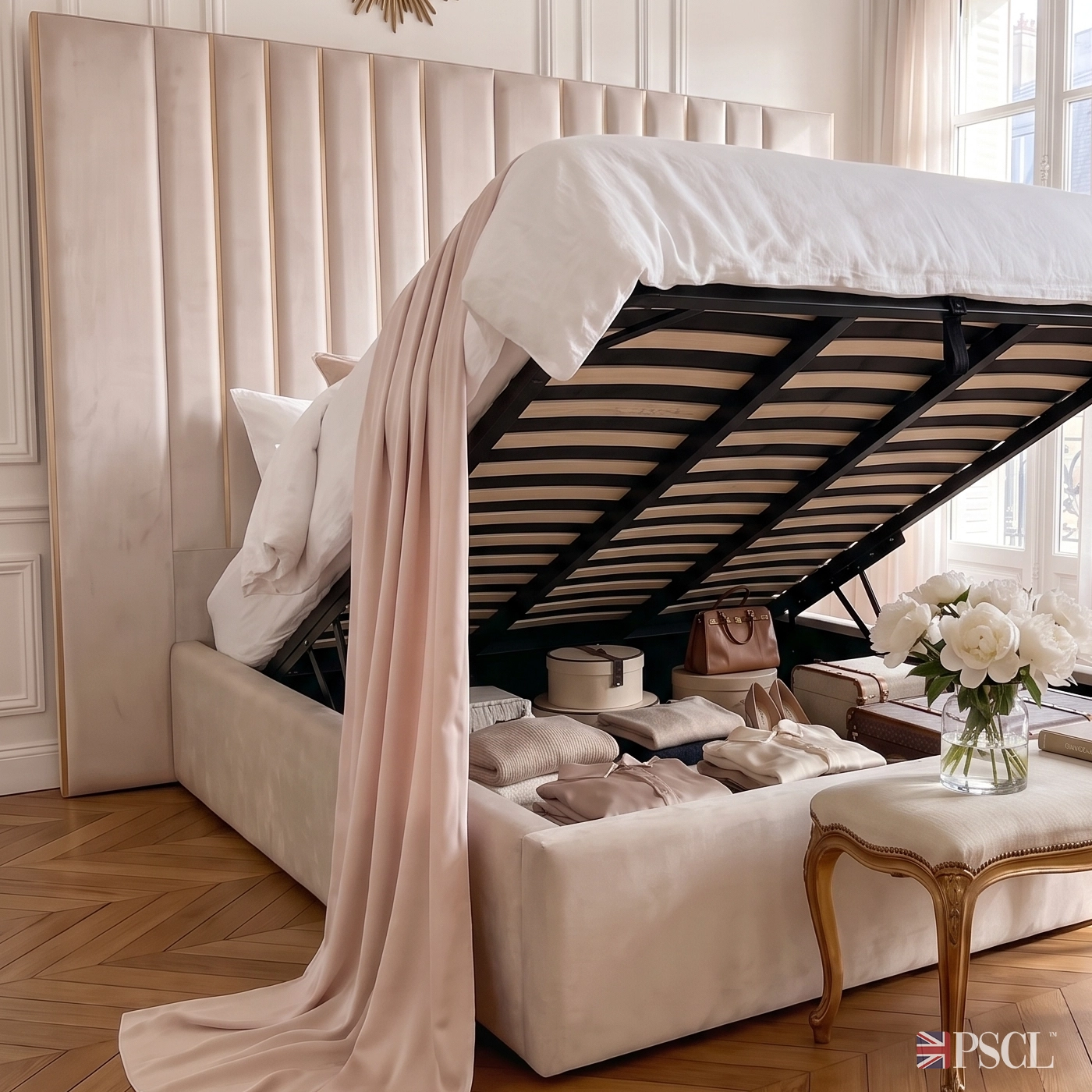
Ottoman Storage Beds: The Complete UK Buying Guide
Last updated: July 2026
If your bedroom never seems to have enough space, an ottoman storage bed is one of the smartest upgrades you can make. It hides a huge amount of storage exactly where you already have unused space, right under your mattress, without adding a single piece of furniture to the room. In this guide we cover everything you need to know before you buy: how ottoman beds work, the difference between side-lift and end-lift designs, slatted versus solid bases, how much you can actually store, choosing the right size and mattress, and how to pick a frame that lasts for years.
At PSCL Beds, ottoman storage beds are our speciality, so we know these frames inside out. Here is the honest, jargon-free version.
What is an ottoman storage bed?
An ottoman storage bed is a bed frame with a hidden storage compartment built into the base. Instead of drawers on the side, the entire mattress and bed platform lift up on a smooth gas-powered mechanism to reveal one large open cavity underneath. When you lower it back down, the storage disappears completely and the bed looks like any other stylish, upholstered frame.
The name comes from the classic ottoman: a padded box that doubled as both seating and storage. A modern ottoman bed takes the same clever idea and scales it up to the size of your whole mattress, giving you far more space than a chest of drawers or a traditional divan with pull-out drawers.
How does an ottoman bed work?
The magic sits in the gas-lift mechanism. Built into the base are gas-piston struts, the same kind of pressurised strut that holds up a car boot. When you lift from the head or the foot of the bed, those struts take the weight of the mattress and the platform for you, so the whole thing rises with a gentle push and holds itself open while you load or unload. Lower it back down and the struts control the descent so it settles softly rather than dropping.
Quality really matters here. A well-engineered strut takes the strain so you barely feel the weight of the mattress, and it keeps holding its position for years. Cheaper mechanisms weaken over time, which makes the mattress feel heavy and lets the platform sag. This is one of the main reasons it pays to buy from a maker who builds and tests the frame properly rather than the lowest price you can find online.
Importantly, lifting the base does not compromise how the bed feels to sleep on. A well-built ottoman keeps the same solid, even platform that makes a good bed supportive. The storage sits within the structure rather than replacing it, so your back gets the same support it would from a standard frame.
Side-lift vs end-lift ottoman beds: which is right for you?
Ottoman beds open in one of two ways, and the right choice comes down to the shape of your room and where the bed sits, not personal taste. Both designs give you exactly the same storage space, because the cavity fills the footprint of the bed either way. The opening direction is only about access.
End-lift ottoman beds
End-lift (sometimes called foot-opening) beds hinge at the foot end, so the mattress rises from the bottom and you access the storage while standing at the end of the bed. This is the most popular option, especially for double, king and super king sizes, because the weight is balanced evenly across the lift and the mechanism feels smooth. You just need clear floor space at the foot of the bed so the platform can swing up and you have room to stand.
Side-lift ottoman beds
Side-lift (or side-opening) beds hinge along one long edge, so the mattress rises sideways and you reach the storage from the side of the bed. This suits smaller beds such as singles and small doubles, and it is ideal when the foot of the bed is against a wall or a wardrobe and you have clear floor space along one side instead. The one thing to plan for: the opening side is fixed when the bed is made, so decide early which side of the room has space, and do not push that same side against a wall.
A quick rule of thumb: larger beds and space at the foot suit an end-lift, while smaller beds or a bed tucked into a corner suit a side-lift.
Slatted base vs solid base ottoman: what is the difference?
Once you have chosen how the bed opens, the next decision is what the sleeping platform is made of. At PSCL we offer ottoman beds with two base types, and each has a clear purpose.
A reinforced slatted base uses sprung or rigid wooden slats across the frame. The gaps between the slats let air circulate around your mattress, which helps keep it fresh and is a good match for memory foam and hybrid mattresses that benefit from ventilation. Our slatted bases are reinforced so they stay firm and supportive rather than flexing over time. You can explore these on our reinforced slatted ottoman beds page.
A solid base uses a firm, continuous board instead of slats. This gives a very even, firm feel underfoot for the mattress, keeps smaller items in the storage cavity from poking up between slats, and creates a fully enclosed compartment. It suits pocket-sprung and orthopaedic mattresses well and is popular with anyone who wants the firmest possible support. See the range on our solid base ottoman beds page.
Neither is better across the board. Choose slatted for breathability and a slightly springier feel, or solid for maximum firmness and a fully sealed storage space.
The benefits of an ottoman storage bed
Ottoman beds have become one of the most requested styles in the UK for good reason. Here is what you actually gain:
- Enormous hidden storage. You reclaim the entire footprint under the mattress, typically several times the capacity of a drawer divan. It is ideal for spare duvets, pillows, seasonal clothing, suitcases and bulky items that clutter cupboards.
- Easy, one-motion access. Because the gas lift does the heavy lifting, you reach everything in a single smooth movement, with no bending to pull out stiff drawers and no rearranging furniture to open them.
- More floor space in the room. The storage is built in, so you can lose the extra chest of drawers or blanket box and let the bedroom breathe. This is a genuine game changer in smaller rooms, box rooms and city flats.
- No loss of comfort or support. A quality ottoman keeps the same solid, even sleeping platform as a standard bed, so you are not trading a good night’s sleep for storage.
- A clean, premium look. With no drawer handles or runners on show, an upholstered ottoman frame looks tailored and high-end while doing a very practical job.
Are ottoman beds worth it?
For most people short on storage, yes. An ottoman bed costs a little more than a plain frame because of the engineering in the lifting mechanism, but it replaces furniture you would otherwise buy and frees up floor space you cannot get back any other way. If you live in a smaller home, rent where wardrobe space is tight, need somewhere to keep guest bedding, or simply want to declutter, the storage more than earns its place.
The main things to plan for are practical rather than dealbreakers: you need clear floor space to open the bed (at the foot for end-lift, or along one side for side-lift), and the bed is heavier than a basic frame, so it is not something you will want to move often. Choose the right opening direction for your room and neither point will bother you.
Ottoman bed sizes explained
Ottoman beds come in the full range of standard UK sizes, so you can match your existing mattress or upgrade. As a quick reference:
- Single (3ft, 90 x 190 cm): perfect for children’s rooms, box rooms and guest rooms. A side-lift is often the practical choice here.
- Small double (4ft, 120 x 190 cm): a great space-saver for a solo sleeper who wants a bit more room, or a snug guest room.
- Double (4ft6, 135 x 190 cm): the most popular UK size and a superb all-rounder for couples and main bedrooms.
- King (5ft, 150 x 200 cm): extra width and length for a more spacious sleep, with a large storage cavity to match.
- Super king (6ft, 180 x 200 cm): the ultimate in sleeping space and, of course, the biggest storage compartment of all.
Remember to measure your room and doorways, and leave clear floor space on the opening side, so the platform has room to rise fully.
Choosing the right mattress for your ottoman bed
Almost any good mattress works on an ottoman bed, but a couple of points are worth knowing. First, weight: because you lift the mattress every time you use the storage, a very heavy mattress makes the bed harder to open, so the gas-lift rating should suit the mattress you choose. Pocket-sprung and hybrid mattresses tend to strike a nice balance of support and manageable weight. Second, base type: memory foam and hybrids pair beautifully with a breathable reinforced slatted base, while pocket-sprung and orthopaedic mattresses feel great on a firm solid base.
If you are buying the frame and mattress together, it is worth matching them from the start. You can browse pocket-sprung, hybrid and orthopaedic options on our luxury mattresses page and pick the feel that suits you.
How to choose your ottoman bed: a quick checklist
- Measure the room first. Confirm the bed size fits and that you have clear floor space where the bed will open.
- Pick the opening direction. End-lift for larger beds and space at the foot, side-lift for smaller beds or a bed against a wall.
- Choose slatted or solid. Slatted for breathability and a softer feel, solid for maximum firmness and a sealed compartment.
- Match the mattress. Keep the weight sensible for easy lifting and pair the feel to the base.
- Check the build quality. A sturdy frame and a properly rated gas mechanism are what separate a bed that lasts a decade from one that sags in a year.
- Think about delivery and assembly. Ottoman beds are heavier than plain frames, so a service that delivers and assembles for you saves a lot of hassle.
Looking after your ottoman bed
Ottoman beds need very little maintenance. Open and close the bed with the mattress evenly positioned so the gas struts share the load, avoid overloading the cavity beyond the platform level, and every so often wipe the upholstery down in line with the fabric care advice. Store softer, bulkier items such as bedding and clothing rather than sharp or hard objects that could rub against the mechanism. Treated this way, a quality ottoman frame will give you smooth, reliable lifting for many years.
Why buy your ottoman bed from PSCL Beds
Every PSCL ottoman bed is made to order in your choice of size, fabric and base type, so you get a frame built to your exact specification rather than a one-size-fits-all option off the shelf. Our customers rate us 5.0 out of 5 on Trustpilot across thousands of independent reviews, and they consistently praise the build quality and the delivery team who bring the bed in and assemble it for you.
Buying from us includes free delivery within UK mainland, assembly by our own team, a 24-month warranty and interest-free finance so you can spread the cost. If you would like help choosing a size, opening direction or base type, our team is a message away on WhatsApp or on freephone 0800 368 7388, and we are always happy to talk it through before you commit.
Ready to reclaim your bedroom space? Browse our full range of ottoman and luxury bed frames, or explore our rapid delivery beds if you need one sooner.
Ottoman storage bed FAQs
How much can you store in an ottoman bed?
An ottoman bed opens up the entire area under the mattress, so the storage roughly matches the footprint of the bed. In practice that is typically several times more than the drawers on a traditional divan, easily enough for spare duvets, pillows, seasonal clothing, suitcases and other bulky items. A larger bed size gives you a larger storage cavity.
Are ottoman beds good for your back?
Yes, a well-built ottoman bed gives the same solid, even support as a standard frame. The lifting mechanism sits within the structure rather than replacing the platform, so your mattress is fully and evenly supported. Pairing the frame with the right mattress for your preferred firmness makes the biggest difference to back comfort.
Is a side-lift or end-lift ottoman bed better?
Neither is better for storage, because both hold the same amount. The choice depends on your room. End-lift beds open from the foot and suit larger sizes and rooms with clear space at the end of the bed. Side-lift beds open from one long side and suit smaller beds or a bed placed against a wall, where you have floor space along one side.
What is the difference between a slatted and a solid ottoman base?
A slatted base uses wooden slats with gaps that let air circulate, which suits memory foam and hybrid mattresses and gives a slightly springier feel. A solid base uses a firm continuous board for maximum firm support and a fully enclosed storage compartment, which suits pocket-sprung and orthopaedic mattresses.
Are ottoman beds difficult to open?
No. The gas-lift struts carry the weight of the mattress and platform for you, so opening the bed takes a single gentle push and the base holds itself open while you load or unload. A quality mechanism keeps that effortless feel for years, which is why build quality is worth paying attention to.
Do you need extra space around an ottoman bed?
You need clear floor space on the side the bed opens: at the foot for an end-lift, or along one long edge for a side-lift. You do not need any extra space at the sides for drawers, which is one reason ottoman beds work so well in smaller rooms.
Can you put any mattress on an ottoman bed?
Almost any mattress works. The main thing to consider is weight, since you lift the mattress to reach the storage, so a sensibly weighted pocket-sprung or hybrid mattress is easiest to use. Match the mattress type to the base as well: breathable slatted for foam and hybrid, firm solid base for pocket-sprung and orthopaedic.